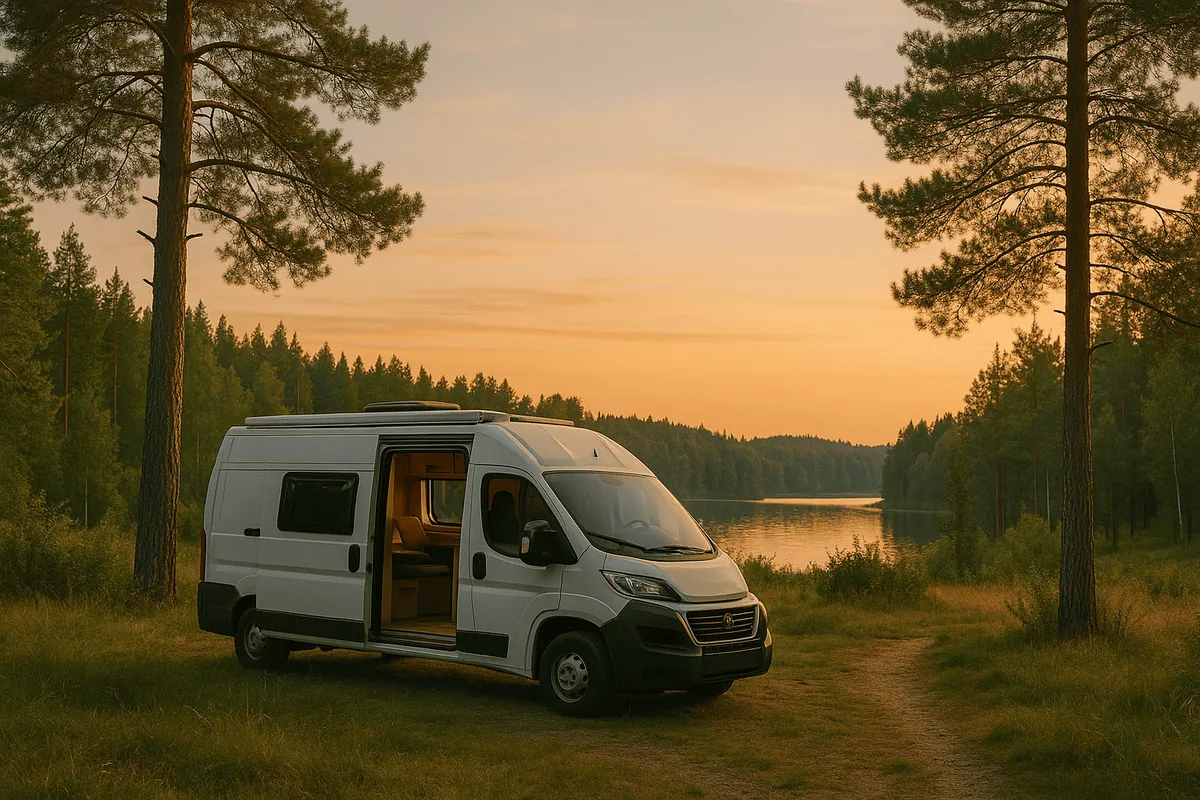
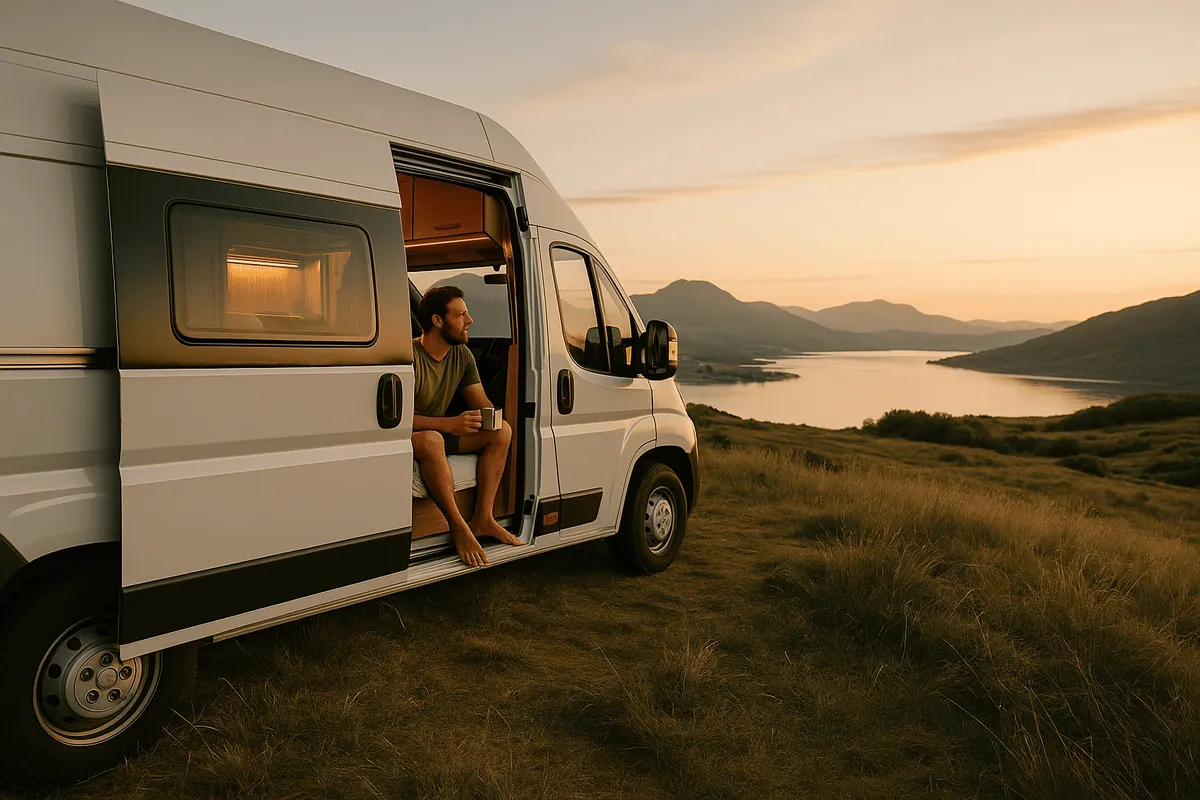
In winter you throw on another blanket and that's that, but summer heat shows no mercy: when the van turns into an oven at three in the afternoon (or worse, at bedtime), the urge to travel evaporates. Beating the heat in a camper in summer is very possible, but it helps to know which options exist, which ones actually cool you down, and how much power they use, because here electricity calls the shots. Let's go from the cheapest to the most powerful.
First (and free): shade and insulation
Before buying anything, the best "air conditioning" is not letting the heat in in the first place. Park in the shade, position the vehicle with the sun's path in mind, and use blinds or insulating covers on the windows (especially the windscreen, which is a giant solar panel). Good insulation — the same kind that keeps you warm in winter — also slows down heat in summer. You'll find it in how to insulate a camper van.
Ventilation: the most efficient solution
Moving air is what gives the best cooling-to-power ratio. A roof fan in the skylight that extracts hot air, combined with a slightly open window that lets fresh air in, creates a flow that significantly reduces the feeling of heat with very low power consumption. For most travellers, this is enough. We cover it in ventilation in the camper.
Evaporative coolers and fans
A step up from a simple fan. Evaporative coolers cool air by passing it through water; they work well in dry climates but lose effectiveness where there's a lot of humidity (the coast). They use little power, but they aren't real air conditioning: they drop the temperature a bit, they don't fully cool the space.
Air conditioning: the most powerful (and the most power-hungry)
If you need real cold, air conditioning is the only option that cools like it does at home. There are several types:
- 230 V units: powerful, but need to be plugged into a campsite's mains supply or a generator. Without a socket, they're not viable.
- 12 V units with a support battery: designed to run off the battery, mainly for sleeping. They're the option for overnighting without a plug, but require a significant electrical installation.
- Gas or diesel-powered: systems exist that avoid the heavy electrical draw.
Here it's worth being honest about power use: electric air conditioning is one of the biggest energy expenses a camper can have. If you want to use it without being plugged in, you need a high-capacity battery and, almost certainly, a good solar panel. Work it out properly before buying in how much battery you need, and if it runs on 230 V, you'll also need an inverter.
Tricks that help
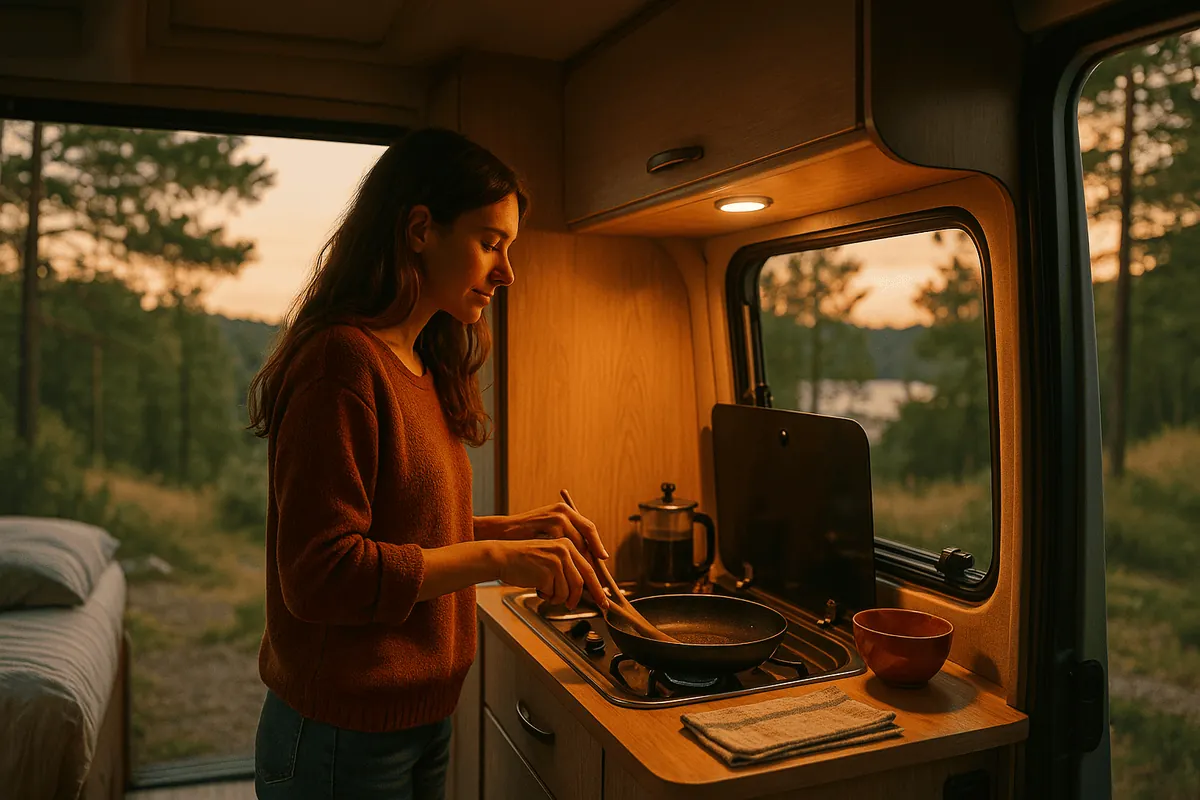
- Cook outside or at cooler times of day: the heat from cooking indoors is brutal in summer.
- Get up early and use siesta time to move on or stay in the shade.
- A damp towel and a fan do a lot for very little.
- Look for altitude or the coast to sleep in: a few degrees less changes the whole night.
In summary
For summer heat, start with what's free (shade, insulation and blinds), move up to good ventilation with a roof fan (the most efficient option), and save air conditioning for when you really need it, knowing that without a plug it demands a lot of battery. The step you can take today: install or check your roof ventilation before summer arrives; it's the upgrade that gives the most comfort for the least money and the least power draw.