Lighting is one of those details that completely changes how your camper feels: good light makes you want to be inside, and bad light turns it into an operating theatre or a cave. And since every amp counts in a motorhome, LED technology isn't an option, it's the standard. Let's look at how to light well while using as little power as possible.
Why LED and not something else
LED uses a fraction of what traditional bulbs (halogen or incandescent) used to draw for the same light, and it barely generates heat. In a setup where energy is precious, this is decisive: you can have the whole van well lit without the battery taking a hit. If you still have any non-LED light left, replacing it is one of the cheapest, most worthwhile upgrades.
Colour temperature: the secret to atmosphere
Not all LED light is the same. The "colour temperature" (measured in kelvin) determines whether the light is warm or cool:
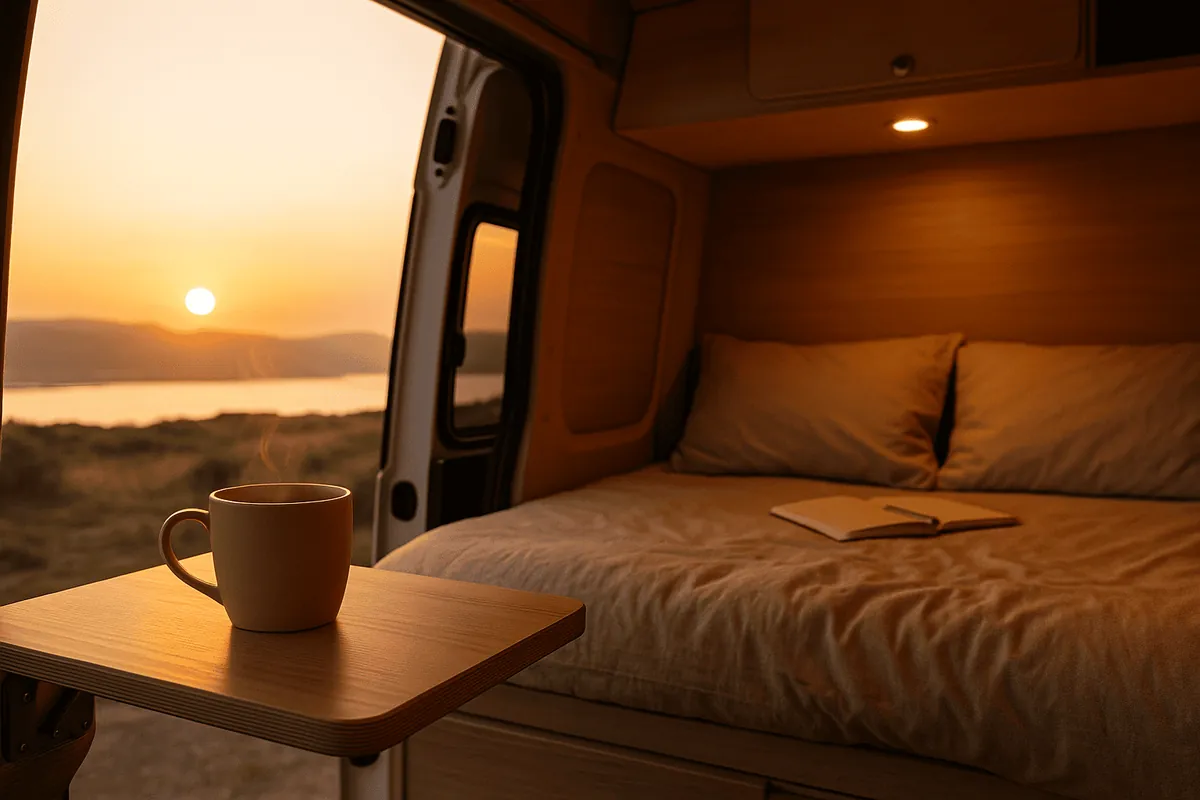
- Warm light (around 2700-3000K): an orangey tone, cosy, ideal for the living area and evenings.
- Neutral/cool light (4000K or more): whiter, good for the kitchen or reading, but too cold for relaxing.
The trick used by campers with good taste: warm light for the general atmosphere and a few more neutral points where you need to see clearly.
Types of light worth having
- General lighting on the ceiling (spotlights or panels).
- Ambient lighting, indirect (LED strips) for evenings without switching everything on.
- Adjustable reading light next to the bed.
- Outdoor light at the door or under the awning for dinners outside.
- A dim light for moving around at night without dazzling anyone.
Dimmable: low-consumption luxury
Dimmable lights let you lower the intensity, which uses less power and creates a much more pleasant atmosphere. It's a detail that improves comfort for almost no extra consumption, one of the best autonomy tricks; see more in how to save battery power.
In summary
LED lighting is essential in a camper because of its very low consumption; combine warm light for atmosphere with neutral points where you need to see clearly, and use dimmers to gain comfort at almost no cost. The step to take today: if you still have any non-LED light, replace it; it's cheap, it cuts consumption and it improves the light instantly.