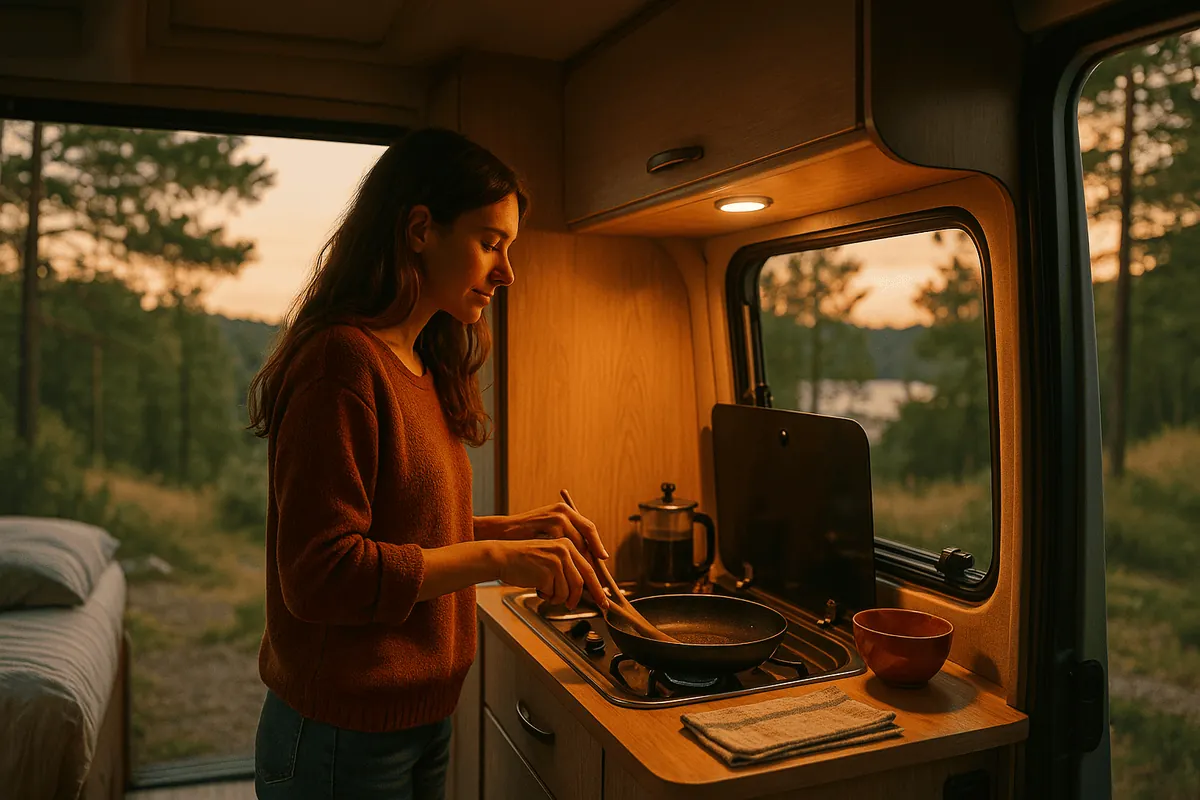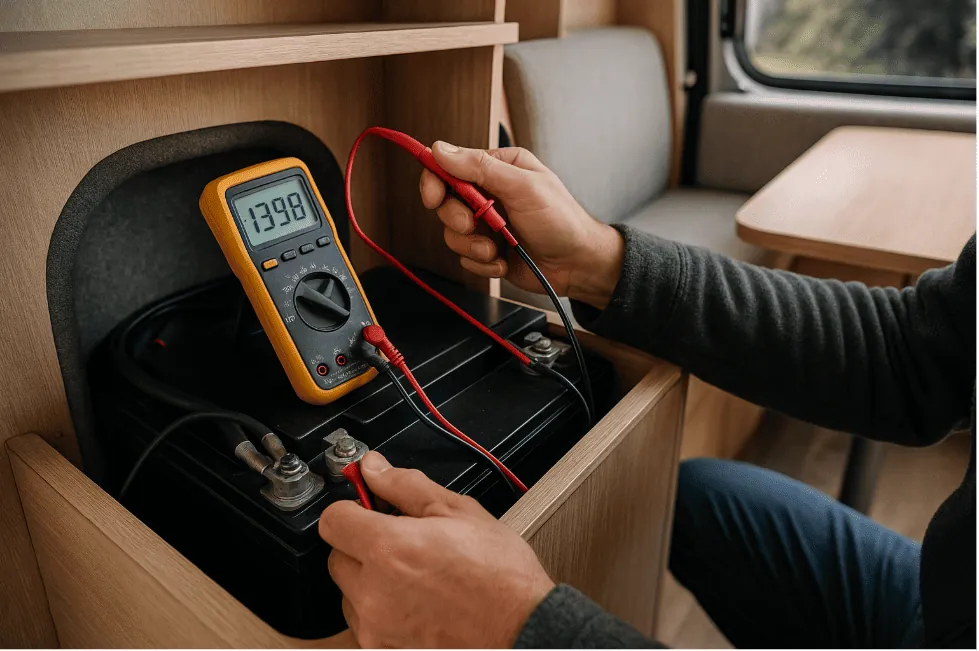
When you travel without a hook-up, every amp counts. And although the obvious answer is more battery and more panel, there's an equally important and far cheaper route: using less. The energy you don't consume is the energy that lasts longest. These are the tricks that genuinely stretch your runtime, without having to spend the trip in the dark or with the fridge switched off.
Start with the biggest consumer: the fridge
The fridge is almost always the biggest draw. To make it use less:
- Make sure it has good ventilation at the back: if it can't get rid of its heat, it works twice as hard.
- Don't open it more than necessary and don't put warm things in it.
- Keep it away from direct sun and from the hob.
- If it's a compressor fridge, set it to a sensible temperature, not the maximum.
We go into this in the camper fridge.
Lighting: switch to LED and turn it down
If you still have any light that isn't LED, change it: LED uses a fraction of the power. And you don't need everything on full; warm, dim lighting uses less and is nicer at night.
Beware of anything that generates heat
Appliances that heat (hairdryer, kettle, toaster, electric heater, filter coffee machine) are the great battery guzzlers. Using them without a hook-up can empty it in minutes. For day-to-day life off-grid, better to do without them or use gas alternatives. We look at this when discussing the inverter.
Switch off what you're not using
An inverter that's switched on uses power just by being on, even with nothing plugged into it. Turn it off when you're not using it. The same goes for appliances on standby: phantom consumption exists on the road too, not just during layups.
Make the most of charging when you have it
Saving also means charging well: use the hours of sunshine for the tasks that consume, drive during the day to add the alternator's charge and, if there's a hook-up at an aire, use it for the high-consumption jobs. That way you keep the battery for when there genuinely is no other source.
The ultimate trick: measuring
You can't save what you can't see. With an app that shows consumption in real time, you can identify instantly which appliance is drawing too much and act on it. What gets measured gets saved. You have the detail in how to monitor consumption.
In short
Saving battery means optimising the fridge (your biggest draw), using LED, avoiding heat-producing appliances without a hook-up, switching off what you're not using and making the most of charging when you have it. The step you can take today: look in the app at what your van is using overnight at rest; you'll be surprised how much goes on "switched off" appliances, and turning them fully off is free runtime.