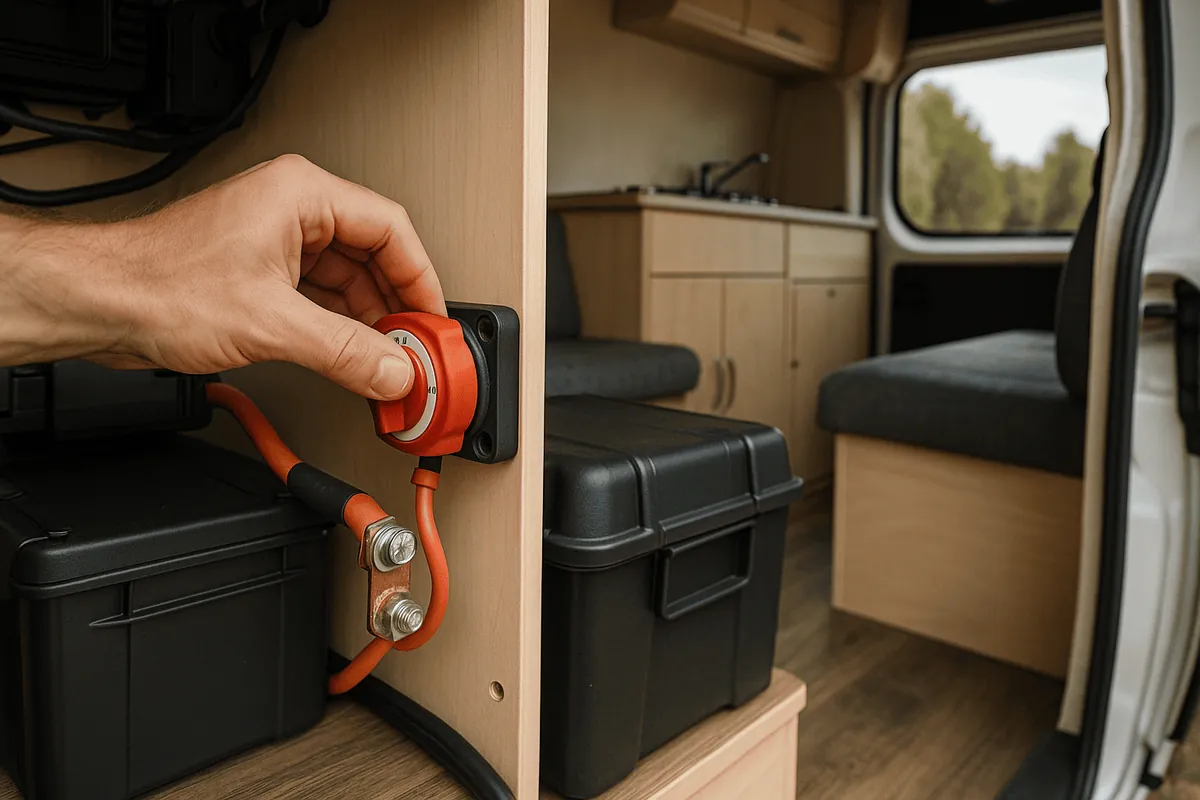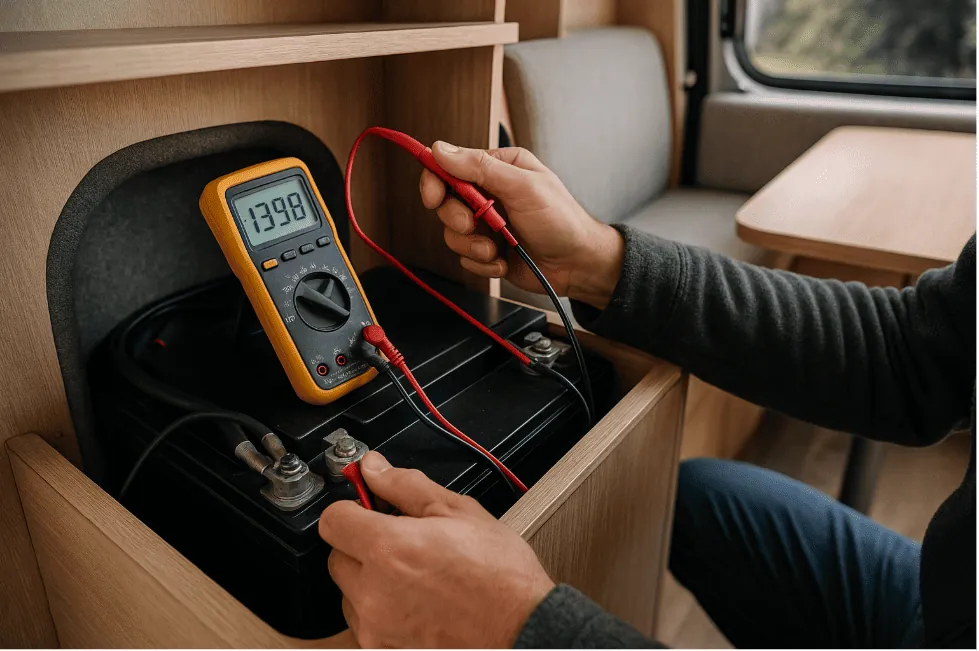

When a single battery isn't enough, the question comes up: do I add a second one? And right after: how do I connect it? Joining batteries in series or in parallel isn't the same thing, and getting it wrong can leave your installation not working or, worse, damage the batteries. The good news is the concept is easy to understand. Let's make it clear.
Parallel: adds up capacity
Connecting in parallel (positive to positive, negative to negative) keeps the voltage the same and adds up the capacity. Two 12 V, 100 Ah batteries in parallel give you a 12 V, 200 Ah system. It's the most common setup in a motorhome, because almost every installation runs on 12 V and what you want is more autonomy (more amp-hours).
Series: adds up voltage
Connecting in series (the positive of one to the negative of the other) keeps the capacity the same and adds up the voltage. Two 12 V, 100 Ah batteries in series give you 24 V, 100 Ah. This is used when the installation runs on 24 V (more common in larger or commercial vehicles) or for certain inverters.
Which one you want
For most 12 V campers and motorhomes, the answer is parallel: you want more capacity while keeping 12 V. Series connection only makes sense if your system runs on 24 V.
The rules for not damaging anything
- Matching batteries: same capacity, same type, same age and, if possible, the same batch. Mixing different batteries causes one to "drag" the other, and they end up imbalanced.
- Don't mix lithium and lead-acid in the same bank.
- Equal-length cables and adequate gauge so the load is shared evenly.
- Each battery with its own protection and tightly secured connections.
A note on lithium: many modern LiFePO4 batteries support parallel connection, but it's worth confirming with the manufacturer the maximum number of units and the conditions, because their BMS units need to work in harmony. Some, like Upcyon's, are designed to be scaled up easily.
Before you double up, do the maths
Before buying a second battery, make sure you actually need one: sometimes the problem isn't a lack of capacity, but excessive consumption or poor charging. Work out your real consumption at how much battery you need and check your autonomy at how to monitor your consumption.
In short
In parallel you add up capacity (same voltage); in series you add up voltage (same capacity). For most 12 V campers, what you're after is parallel, always with matching, well-protected batteries. The one thing to do today: before adding a second battery, confirm your installation runs on 12 V and work out whether the problem is capacity or consumption; you might not need to double anything at all.