Being able to cook on board is one of the great advantages of camper life: you eat what you like, when you like, and you save a lot compared with eating out every day. But a van galley has its particularities, above all in safety and consumption. Let's look at the types of hob you can fit and how to use them sensibly.
Gas hob: the most common
Gas burners are the most widespread option in campers, and for good reasons: they heat fast, they're simple and they don't depend on the battery. They run on cylinders (butane, propane or refillable ones).
- In favour: immediate power, no electricity used, reliable.
- Against: you depend on cylinders (refilling them, storing them) and gas demands safety and, ideally, an approved installation.
Electric and induction hobs: mind the consumption
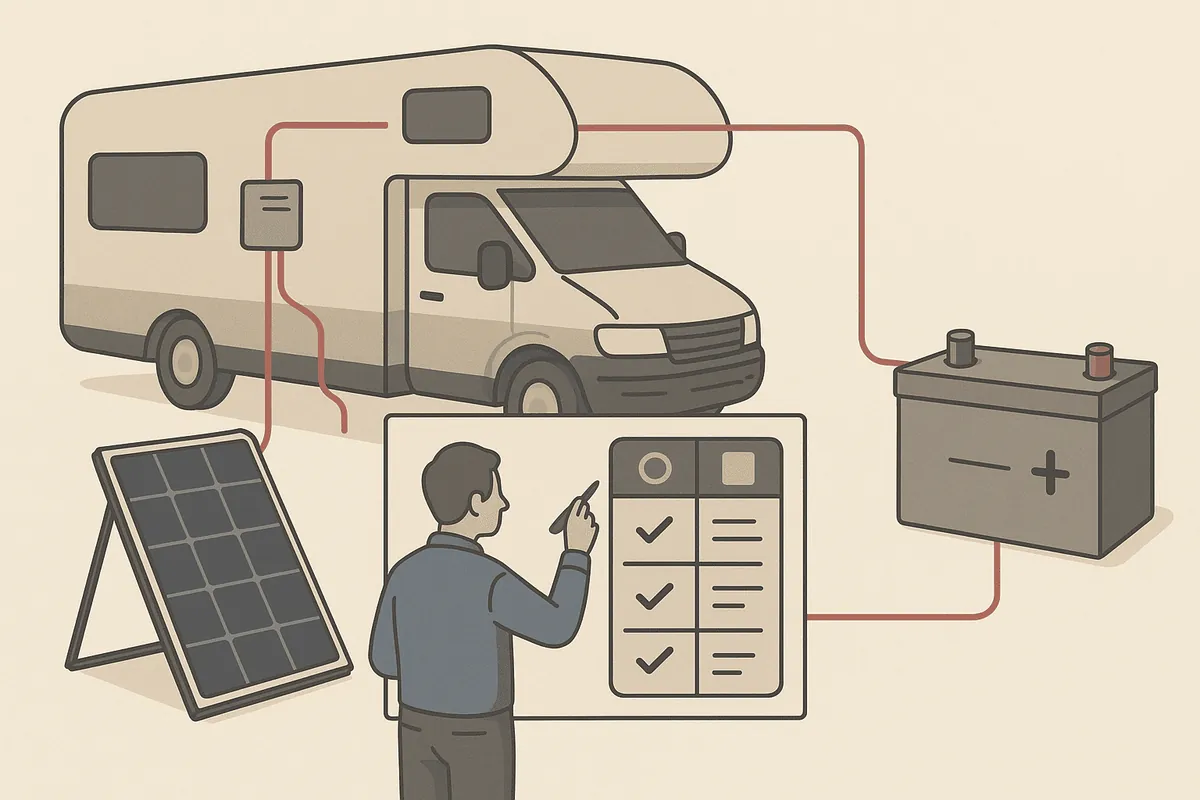
An induction hob is convenient and clean, but we have to be very honest here: cooking with electricity uses a huge amount. Induction draws so much power that it would empty an ordinary battery in no time, so it's only realistic plugged into the mains at a campsite or with a very large, properly sized electrical installation. As your main hob without a hook-up, it isn't viable for most people.
Diesel hob: the Nordic option
Less well known, it runs on the vehicle's own diesel and does away with carrying gas. It heats more slowly, but it's very safe (no cylinders) and convenient for anyone who wants to drop gas entirely. Worth considering if you live in the van and find managing cylinders a nuisance.
Safety first
Cooking inside a small, enclosed space calls for precautions:
- Always ventilate when cooking: as well as being safer, it stops you filling the van with moisture (the great cause of condensation).
- Carbon monoxide (CO) and gas detectors: essential if you use gas. CO has no smell.
- Never leave a flame unattended and keep a fire blanket or extinguisher to hand.
- Have a professional fit and check any gas installation.
The minimum for cooking well
You don't need a restaurant kitchen. With one or two burners, multi-purpose unbreakable kitchenware, a good frying pan and a saucepan you can handle almost anything. A small pressure cooker saves gas and time. So you don't forget the essentials, run through what to take in a motorhome.
In short
For real runtime, the gas hob is the most practical option; electric and induction only make sense plugged into the mains; and diesel is a safe alternative for anyone who wants to drop gas. The step you can take today: if induction tempts you, work out first how much battery it would take to use it without a hook-up; the number usually rules the idea out on its own. And however you cook, ventilate and fit a CO detector.