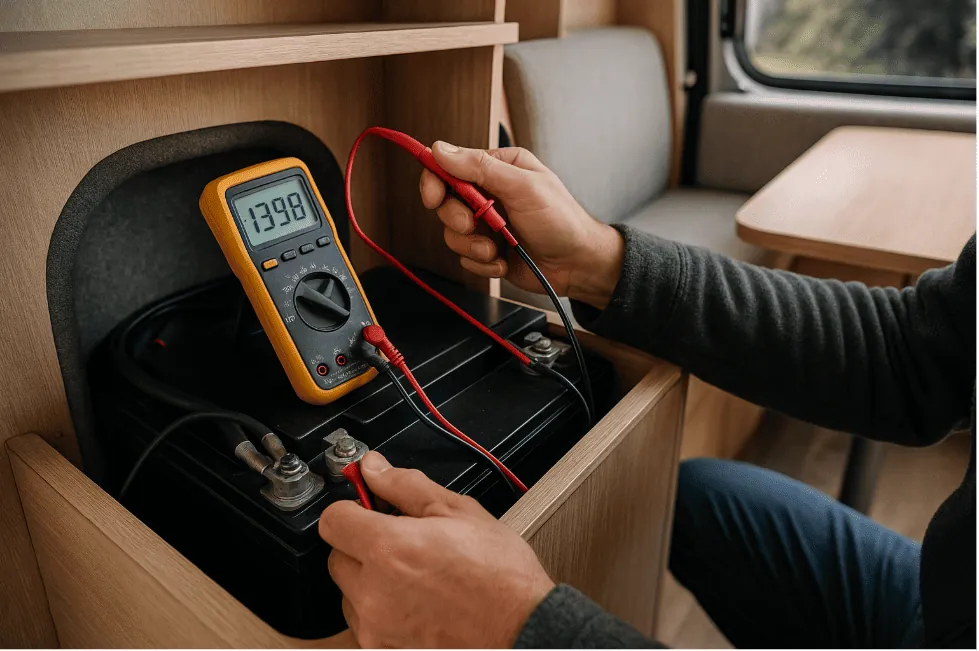

The 12 V side of your camper (the battery) is low electrical risk for people. But the moment you plug into a campsite or site's 230 V mains, you're in a different league: there, electricity can genuinely be dangerous to your life, and safety comes first. Two things protect you: earthing and the RCD (residual current device). Let's understand them without getting overwhelmed.
What earthing is
Earthing is a safety path that lets current "escape" to the ground if there's a fault, instead of passing through your body if you touch a live metal part. A house has a physical earth connection; a motorhome plugged into a hook-up post gets its earth through that post and its wiring. That's why it matters that both the campsite's installation and yours are done properly.
The RCD: your lifesaver
The residual current device (RCD) is the key safety component protecting people on the 230 V side. It watches that the current coming in equals the current going out; if it detects a small leak (for example, because it's passing through a person), it cuts the power in milliseconds. It's literally what prevents electrocution. Your 230 V installation should have one.
What to keep in mind when connecting to mains power
- Use a suitable cable rated for outdoor use with sufficient gauge, and its specific connector.
- Don't improvise homemade adapters or dodgy connections: this isn't the place to experiment.
- Check that your 230 V installation has an RCD and a circuit breaker (see fuses and protection).
- When in doubt, call a professional. The 230 V side isn't the place to learn as you go.
And the 12 V side
The low-voltage side (the battery and its loads) is far less dangerous to people, but it has its own risks: short circuits and overheating, which are controlled with fuses and correctly sized cable. Safety is a whole package: well-protected 12 V and 230 V with earthing and an RCD.
In short
When connecting to 230 V mains power, earthing and the RCD are what protect your life in the event of a fault; your 230 V installation should have an RCD along with suitable cable and connections. The one thing to do today: check that your 230 V panel has a residual current device fitted; if you're not sure, have a professional check it before you plug into a hook-up post again.