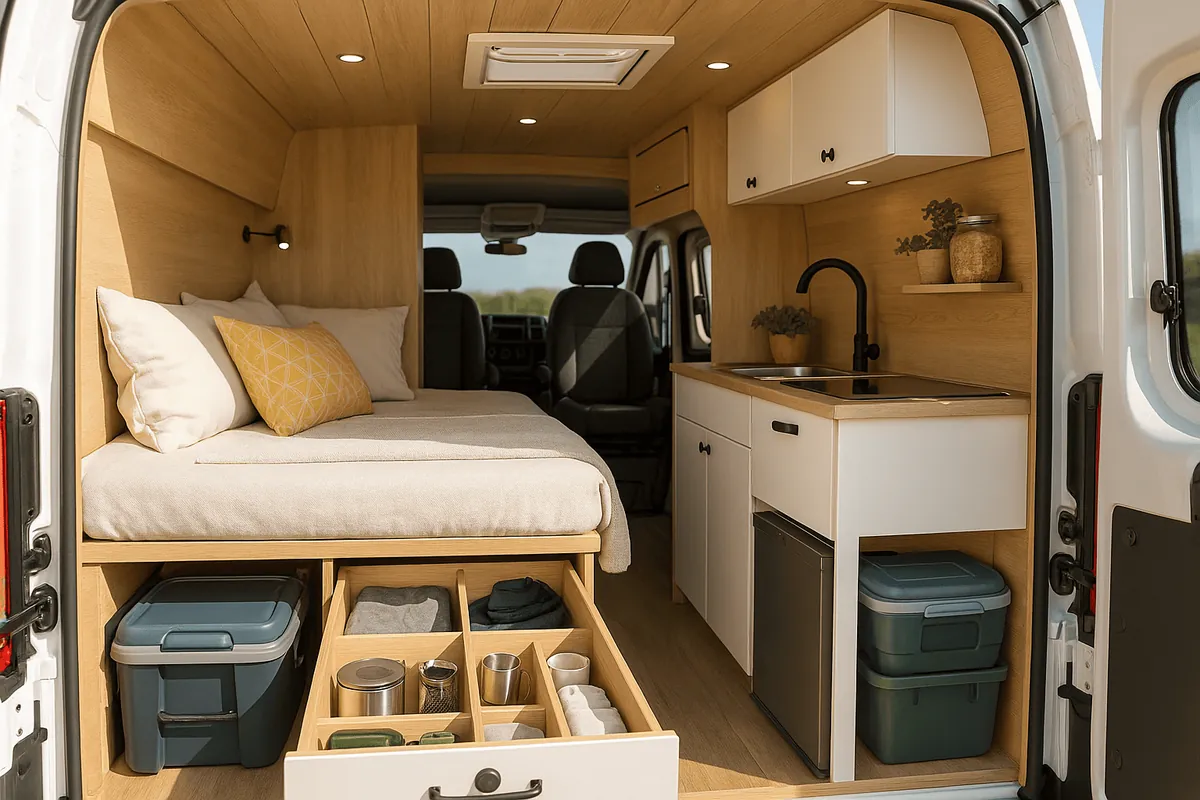

Camper insurance is one of those things nobody feels like looking at, right up until the day you need it. And at that point, the difference between having chosen well and having gone for the cheapest option can run into thousands. Insuring a camper van has its particularities compared with a normal car, above all because of the conversion work and the equipment. Let's go through it clearly so you get it right without paying over the odds.
The types of cover
As with any vehicle, there are three basic levels:
- Third party: the legal minimum. It covers the damage you cause to others, but not your own.
- Third party, fire and theft: adds cover such as theft, fire and glass. A very popular middle ground.
- Comprehensive (with or without an excess): also covers your own damage. The most complete and the least stressful, especially if the camper is new or valuable.
What a camper policy really should cover
Beyond the level of cover, look at the things specific to the camper world:
- Installed equipment and accessories: solar panels, awning, furniture, electronics. A car doesn't have them; on a camper they are worth a lot. Check they are covered, and for how much.
- Personal belongings inside the vehicle.
- Roadside assistance suited to the size of the vehicle and, better still, with no minimum distance from home.
- Roof and underbody damage, the most typical kind on tall vehicles.
The key point: declaring the conversion
This is the most important part, and where most people get caught out. If you have converted or type-approved the van, the modifications have to be declared and recorded on the vehicle's registration documents. A policy taken out on a "panel van" when it is in fact a camper with furniture, gas and electrics may not pay out on a claim, because the real risk was not the one declared. Declaring it properly protects your investment. It goes hand in hand with getting your camper approved.
How much it costs (and what it depends on)
The price varies a great deal depending on power output, value, the age of the vehicle, your claims history and the cover you choose. As a rough guide, comparison sites quote camper insurance from around €179 a year for their most basic options, rising with the cover and the vehicle. [Note: prices vary widely by country, insurer and driver profile — get current quotes for your own market.] A properly approved camper with its conversion declared is usually easier and cheaper to insure than one in an irregular situation.
How to choose without overpaying
- Compare several quotes with the same cover, not just the price.
- Read the excess on comprehensive policies: a very high excess brings the premium down but penalises you when you claim.
- Consider specialist insurers for campers and motorhomes: they understand the vehicle and its accessories better.
- Check the limits on accessory cover: if you carry a lot of kit, make sure the sum insured is enough.
In short
A good camper policy isn't the cheapest one, it's the one that covers what really matters: your own damage if the vehicle warrants it, the installed equipment, decent assistance and, above all, with the conversion declared. The step you can take today: check that your policy reflects that the vehicle is a camper with its conversion work; if it doesn't, no low price makes up for the risk of not being covered. And if you're going to get it approved, do that before you insure it.