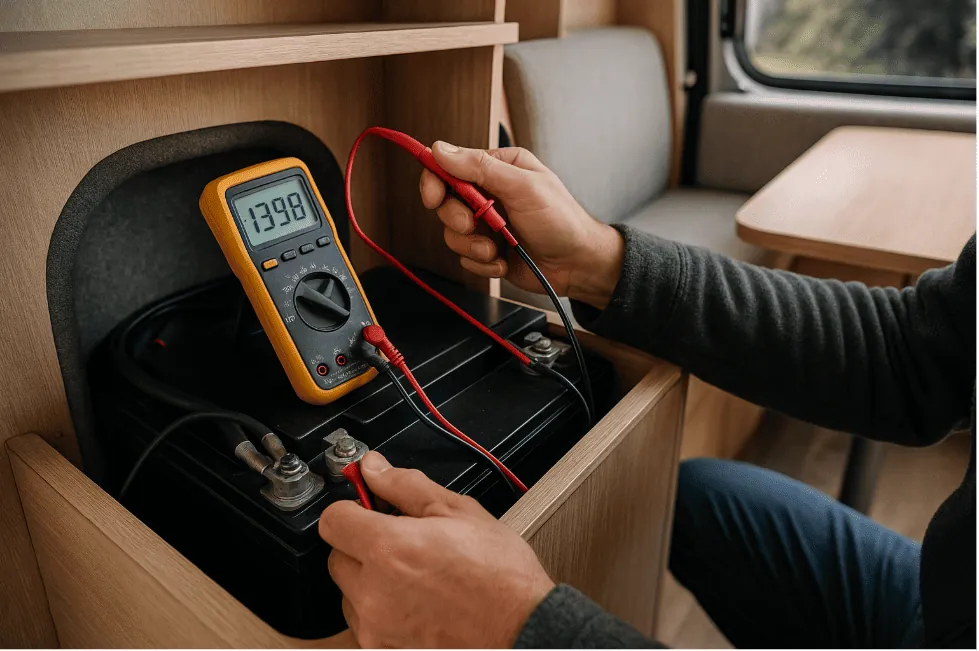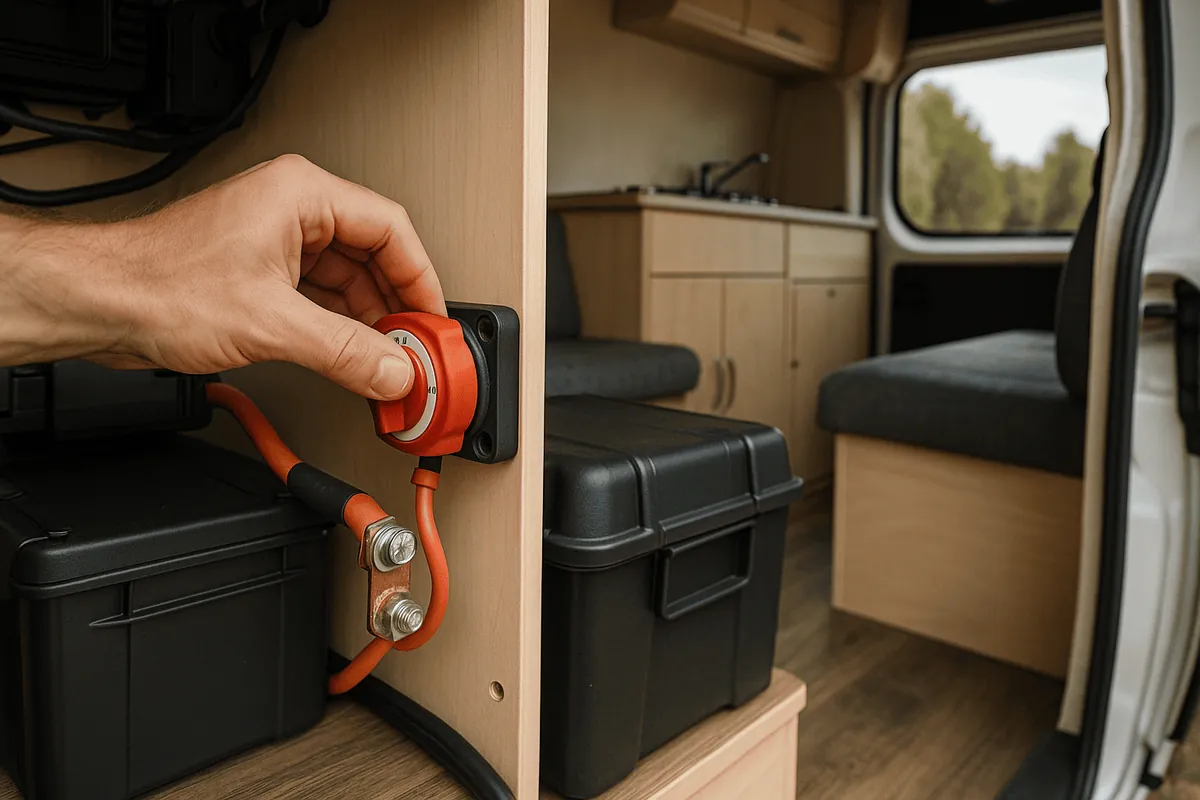

It's one of the most common and least visible mistakes in motorhome installations: a cable that's too thin. You can't see it, it doesn't jump out at you, but it makes the cable heat up, causes voltage drop along the way, and stops your appliances from performing properly, on top of being a hazard. Choosing the correct cable gauge (its thickness) is essential for a safe, efficient installation. Let's look at it without complicated formulas.
Why gauge matters
Current flows through a cable, and every cable offers a small amount of resistance. If the cable is too thin for the current passing through it, two bad things happen: it heats up (risk of failure and fire) and there's a voltage drop (the battery's 12 V arrives at the appliance as 11 V or less, causing poor performance or none at all).
What the correct gauge depends on
Three factors:
- The current (amps) that will flow: more draw, more gauge needed.
- The length of the run: the longer the route (there and back), the more gauge is needed, because voltage drop accumulates.
- The voltage drop you'll accept: in a 12 V system it's recommended to keep it under a small percentage, because every volt counts.
The practical rule
Don't just reuse the cable from a previous installation "by eye". High-current runs (battery-to-inverter, battery-to-charger, alternator) need generous gauges (often 16, 25, 35 mm² or more). Low-draw runs (an LED light, a sensor) can use thin cable. The proper way is to calculate it using a gauge table or calculator based on amps and metres; when in doubt, better to go too thick than too thin.
The typical mistake when switching to lithium
An installation that was fine for a modest lead-acid battery can fall well short once lithium and a powerful inverter are fitted, because much more current now flows through it. Reusing that thin wiring is one of the most frequent mistakes; see installation mistakes. It goes hand in hand with good fuses.
In short
Cable gauge is chosen based on current and run length, to avoid overheating and voltage drop; high-draw runs need thick cable. The one thing to do today: identify your highest-current run (usually battery-to-inverter) and check the cable is thick enough; that's where a thin cable causes the most problems.