You have solar panels on the roof, but between them and the battery sits a small component that decides how much of that energy you genuinely use: the charge controller. And when it comes to choosing one, the same question always comes up: MPPT or PWM? The difference is real and it affects your runtime, particularly on the days when the sun is at its worst. Let's clear it up without the jargon.
What the controller is for
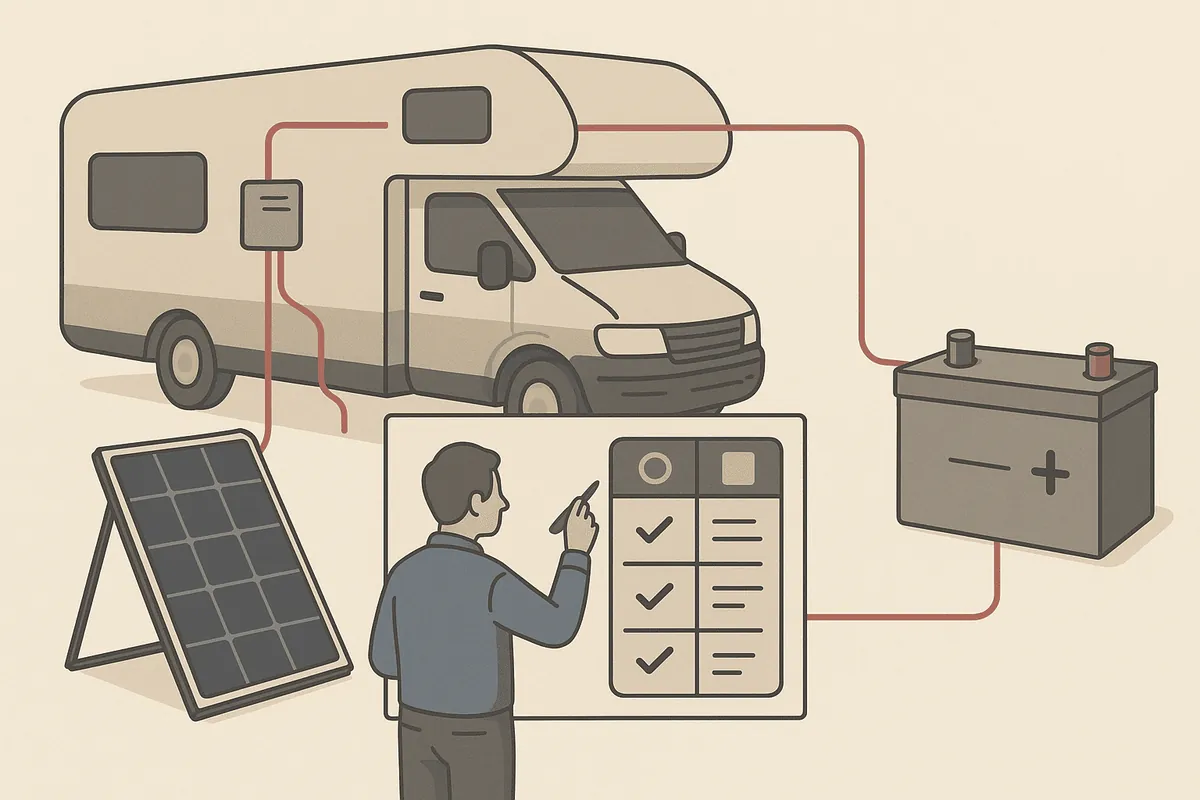
A solar panel generates energy that cannot be fed straight into the battery without control: it would damage it. The controller adapts that energy to the voltage and the form the battery can safely accept, managing the charge. Without one, no solar installation is worth having.
PWM: simple and cheap
The PWM controller is simpler and cheaper. It works by "pulling" the panel voltage down to match the battery's, which means it wastes part of the energy the panel could deliver, especially when light is poor or the panel and battery are not well matched. It does the job on small installations with plenty of sun.
MPPT: more efficient
MPPT (maximum power point tracking) is more advanced: it constantly hunts for the point at which the panel delivers most energy and converts it optimally for the battery. In practice it gets considerably more out of every hour of sun, above all in weak light, in winter or on larger installations. It costs more, but it delivers more.
Which to choose
- MPPT if you want to squeeze your installation, you travel in winter, you have a panel of any real power or you depend heavily on the sun. For most campers looking for genuine runtime, it pays for itself.
- PWM for very small installations, tight budgets and summer use with sun to spare.
The controller doesn't store energy: it only manages it. The battery is what stores, so the two go hand in hand. We look at this in solar panels for campers and, to size the whole system, in how much battery you need.
In short
The controller adapts the panel's energy to the battery; MPPT gets more out of the sun (especially in low light) than PWM, which is simpler and cheaper. The step you can take today: if your solar installation is anything more than minimal, or you travel in winter, go for MPPT; the difference in performance shows up exactly when you need the energy most.