
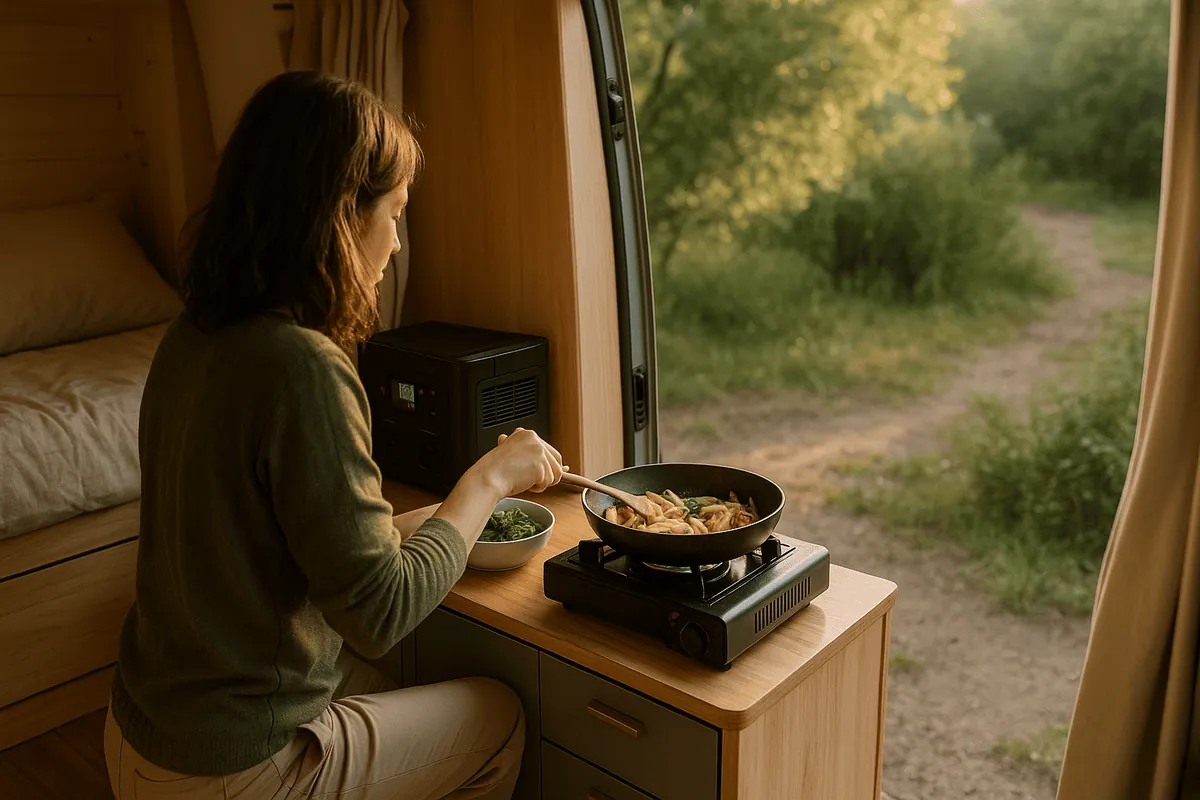
The van you choose as your base shapes your entire camper: how much space you'll have, whether you can stand up, how much you'll spend on fuel, and where you can park. It's the most expensive decision and the hardest to undo, so it's worth thinking through properly. There's no single "best van to convert" for everyone; there's one that fits your way of travelling best. Let's sort them by use.
What to look at before the model
Rather than falling for a brand, focus on these four factors:
- Interior height: do you want to stand up inside? That immediately rules out low-roof vans and points you towards high-roof or pop-top versions.
- Length: longer means more space, but also harder to park and drive in the city.
- Payload (GVM): how much weight you can legally add. A full conversion adds up, and running out of margin is a real problem.
- Reliability and maintenance: you're going to live in it; a reliable engine with easy-to-find parts is worth its weight in gold.
Compact: for the city and couples
Vans like the Volkswagen Caddy or similar. They fit in any parking space, use little fuel, and are discreet for sleeping in the city. In exchange, space is very tight: no bathroom, usually no standing room. Ideal if you prioritise moving around freely and doing short getaways rather than long-term nomadic living.
Mid-size: the most popular balance
The go-to category for van conversions. This includes the Volkswagen Transporter, the Ford Transit Custom, or the Toyota Proace. A good balance between liveability and manoeuvrability: they fit in a parking space (tight, but they fit), drive well, and give room for a proper bed and kitchen. With a pop-top roof you gain sleeping height without giving up a manageable footprint. It's the safe bet for most people.
Large: for genuinely living inside
The Fiat Ducato (and its siblings, the Citroën Jumper and Peugeot Boxer), or the large Ford Transit. They allow you to stand up, fit an internal bathroom, permanent beds, and plenty of storage. They're almost a motorhome in a panel-van body. In exchange: harder to park, higher fuel consumption, and pricier insurance. For anyone doing long stints or working remotely from the van, it pays off.
New vs second-hand
A well-chosen second-hand van saves a lot of money to invest in the conversion, but check the mechanics thoroughly and, above all, watch for rust: a rusty van is a bottomless money pit. A new one gives peace of mind and a warranty, in exchange for a bigger upfront outlay.
Remember approval and weight
Whichever you choose, two things aren't negotiable: that the conversion can be officially approved (see approving a camper van conversion) and that you don't exceed the maximum authorised weight. If you're unsure between a van conversion or a motorhome, the differences between camper, motorhome and van can help.
In short
The best van to convert is the one that fits your use: compact for the city and short trips, mid-size for the best overall balance, large for genuinely living inside. The one thing to do today: before browsing listings, answer whether you need to stand up and where you plan to park; those two answers cut the list in half. And always check the available payload, because a conversion weighs more than you'd think.