
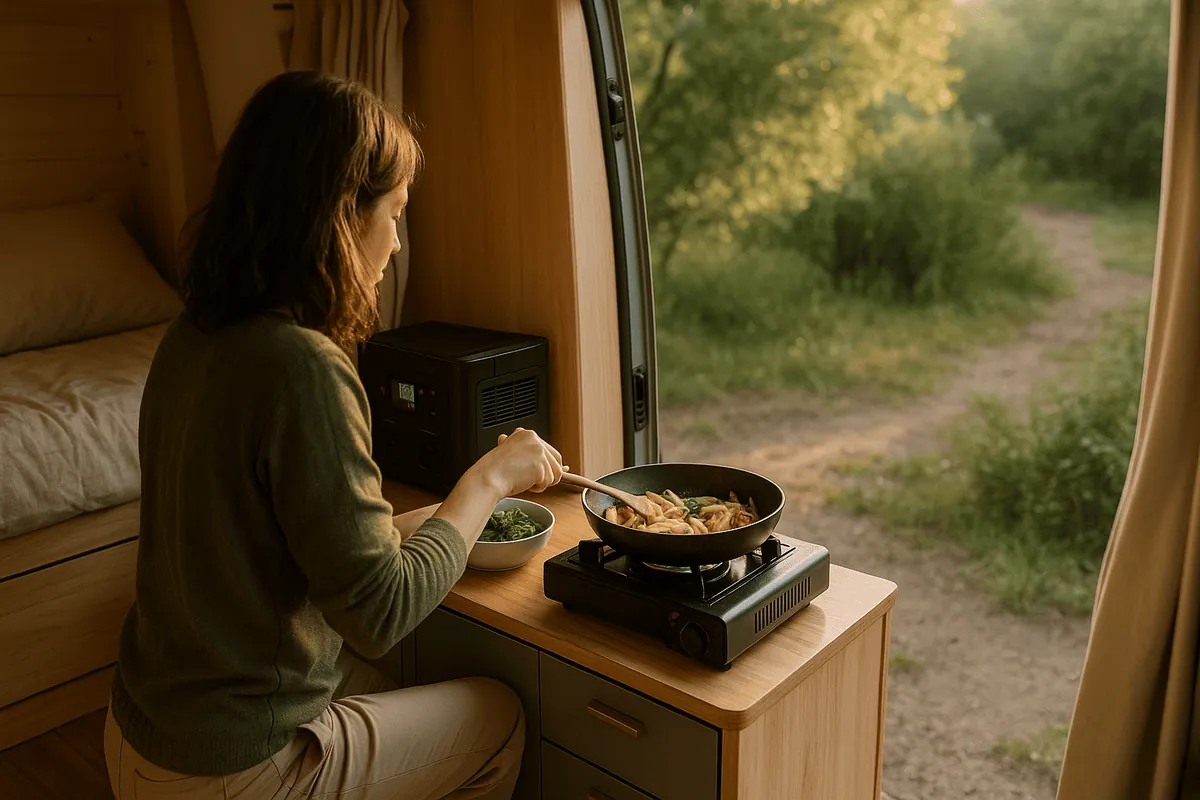
For anyone who dreams of sleeping at the end of a mountain track, on a secluded beach or deep in the desert, the 4x4 camper van is the vehicle of total freedom. Four-wheel drive gets you where a regular camper can't, opening up a world of spots just for you. But it also comes with its own costs and trade-offs. Let's take a look.
What 4x4 brings to the table
- Access to incredible places: dirt tracks, sand, mud, snow, steep gradients.
- Safety and traction on difficult surfaces and in bad weather.
- Freedom to camp away from the crowds (always respecting local rules and the environment).
- The overland philosophy: self-sufficiency and adventure.
Common base models
From vans with a 4x4 version (Volkswagen, Mercedes, Ford with all-wheel drive or systems like 4Motion/4x4) to more extreme vehicles built on off-road chassis. The right choice depends on how much genuine off-roading you're going to do: for easy tracks, a 4x4 van is more than enough; for extreme terrain, you need something more specialised.
The downsides
- More expensive to buy and, sometimes, to maintain.
- Higher fuel consumption.
- Limited size: 4x4s tend to be smaller vans, with less living space than a full motorhome.
- Responsibility: off-roading demands respect for the environment (staying on authorised tracks, not damaging nature).
Kit for adventure
A 4x4 camper usually goes hand in hand with strong self-sufficiency: solar panels for days away from any hook-up, generous water tanks, suitable tyres and, sometimes, a roof tent to free up interior space. Off-grid power is key (see solar panels).
In summary
The 4x4 camper van gets you where others can't, ideal for overlanding and adventure, at the cost of higher price, consumption and less living space. The step to take today: be honest about how much genuine off-roading you'll actually do; for easy tracks and trails, a standard 4x4 van is more than enough, and only extreme terrain justifies a more specialised, pricier vehicle. And always respect the environment.