
You see them more and more in the camper world: those portable energy "boxes" with sockets, USB and a screen — power stations. They are convenient, and they have opened up a debate: is a portable station worth it, or is a bespoke fixed electrical installation better? There is no single answer; it depends a great deal on how you travel and how much energy you need. Let's compare them honestly.
The portable power station
It is a battery with integrated electronics (inverter, charger, outputs) in a format you can pick up and carry. You plug it into the mains to charge it, or into a solar panel, and you draw 230 V, 12 V and USB from it.
- In favour: it needs no installation, you move it wherever you like (even outside the vehicle), it's plug and play and you can use it at home or in another car. Ideal for starting out, for vans that haven't been converted or for occasional use.
- Against: limited capacity compared with a fixed installation, it takes up "living" space inside, and for the same energy it usually works out dearer and heavier. It doesn't integrate with the alternator to charge as you drive.
The bespoke fixed installation
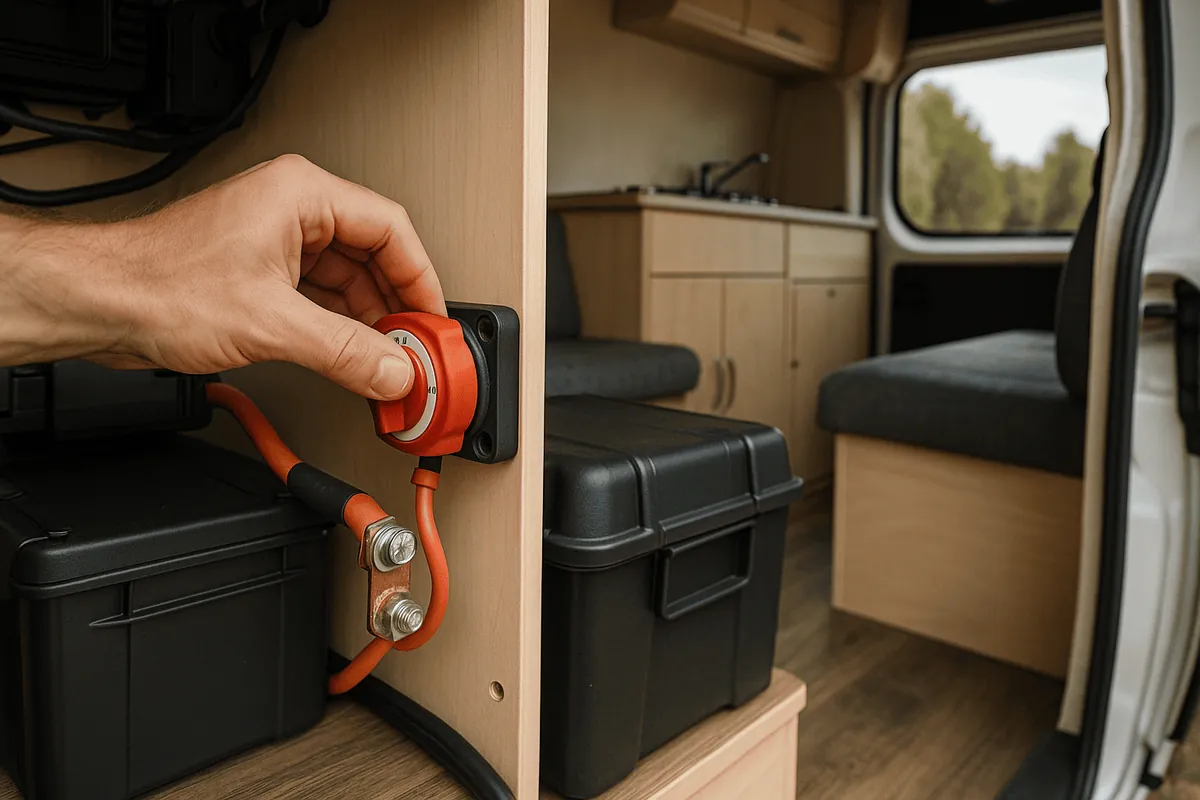
This is the classic electrical installation: leisure battery, charger, solar controller, DC-DC charger, inverter, all integrated into the vehicle.
- In favour: far more capacity and runtime, it charges from three sources (mains, sun and alternator while driving), it is optimised for the vehicle and it doesn't eat into usable space. The option for anyone who lives or travels a lot in the camper.
- Against: it requires fitting (or a professional) and a larger up-front investment, and it's worth having it approved.
Who each one is for
- Power station: if you're starting out, use the van occasionally, don't want any building work or need something that also works away from the vehicle.
- Fixed installation: if you travel often, need genuine runtime, want to charge while driving and make the most of the space. It's what really frees you from the hook-up.
The key in both cases: capacity
Whichever you choose, the mistake is buying blind. Work out first how much energy you use per day; that number tells you whether a power station is enough or whether you need a fixed installation. You have the guide in how much battery you need.
In short
The power station is convenient and needs no building work but is limited; the fixed installation gives far more runtime and charges as you drive, in exchange for investment and fitting. The step you can take today: work out your daily consumption and compare it with the capacity of a power station; if it falls short for your days without a hook-up, your route is a properly sized fixed installation.