
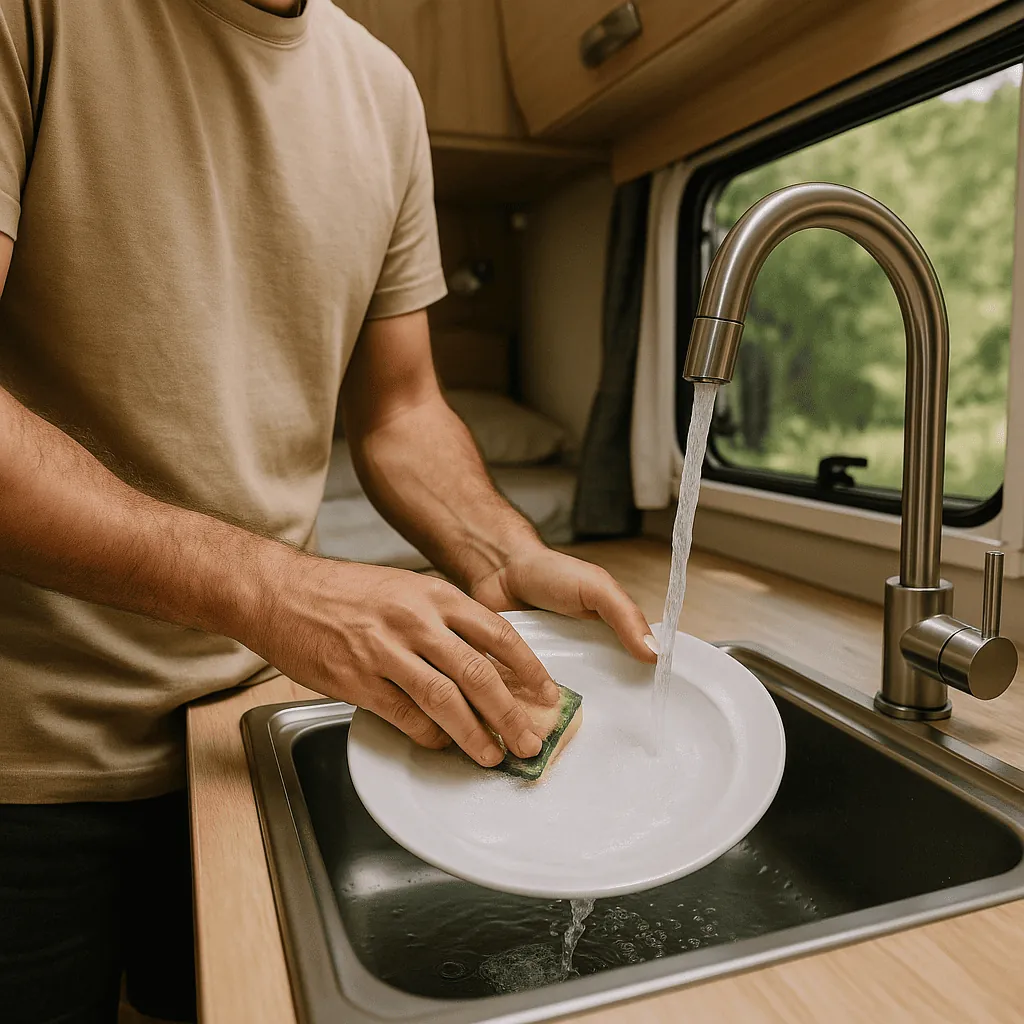
Owning a cabin, a shelter or a countryside home with no mains electricity no longer means giving up comfort. The same technology that has set motorhomes free (solar plus lithium batteries) lets you live off-grid with lighting, a fridge, pressurised water and even appliances, self-sufficiently and quietly. Here are the key points, which are close cousins of those for a camper.
Living off the grid: the same principle as a camper
An off-grid home works just like a motorhome that lives far from a plug socket: it generates its own energy, stores it and manages it. What changes is the scale (it usually needs more capacity) and that it is fixed in place, but the components and principles are the same. If you understand a camper's power system, you understand an off-grid cabin's.
The components
- Generation: solar panels (the foundation; the sun is free and silent), sometimes backed up by a small wind turbine or a generator for sunless days.
- Storage: the batteries. LiFePO4 lithium has replaced lead-acid thanks to its greater usable energy, lifespan (thousands of cycles) and low maintenance, which is key for an installation you don't want to be worrying about (see lithium vs lead-acid).
- Conversion: an inverter to get 230 V mains power like in any house (see inverter-charger).
- Management and monitoring: knowing your energy levels so you never run out.
Why lithium changes everything
Old lead-acid off-grid setups were bulky, heavy, had little usable energy and a short lifespan, and needed regular maintenance. LiFePO4 lithium uses far more of its capacity, lasts for years (thousands of cycles), charges quickly (making the most of the sun) and needs virtually no maintenance. It's the same leap that has transformed campers, applied to a home.
What to prioritise
For a home you rely on every day, prioritise reliability, lifespan, safety (a good BMS, LiFePO4 chemistry), certifications and good technical support, looking at the total cost over the years. Size the generation, storage and consumption carefully; a fixed installation deserves a careful calculation, ideally with a technical team (the calculator gives guidance, though it's designed for campers).
In summary
Living off-grid in a cabin or remote home is comfortable and achievable with solar and lithium batteries, the same technology that gives campers their freedom, at a larger scale. The step to take today: if you have a shelter with no mains power, a solar-plus-LiFePO4-lithium setup gives you lighting, a fridge and comfort self-sufficiently and quietly; prioritise reliability and support, and size it properly with technical help. Combine it with industrial and off-grid lithium.