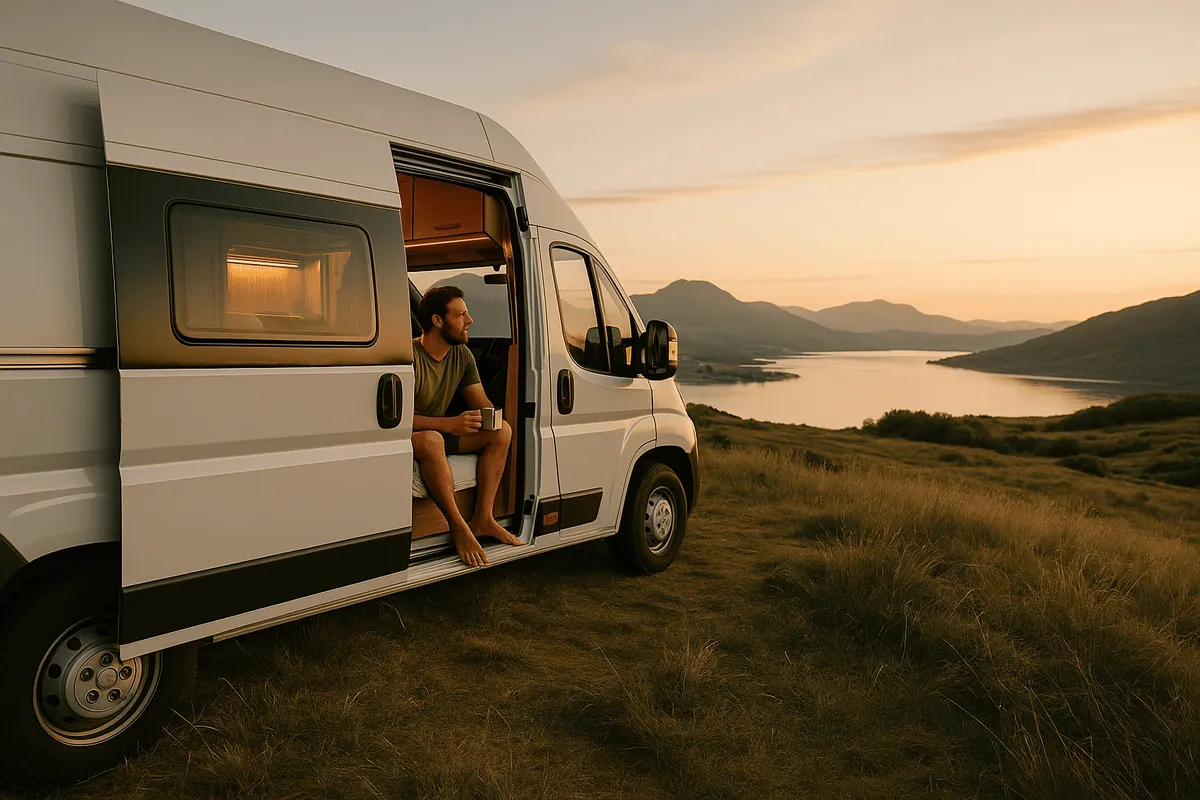
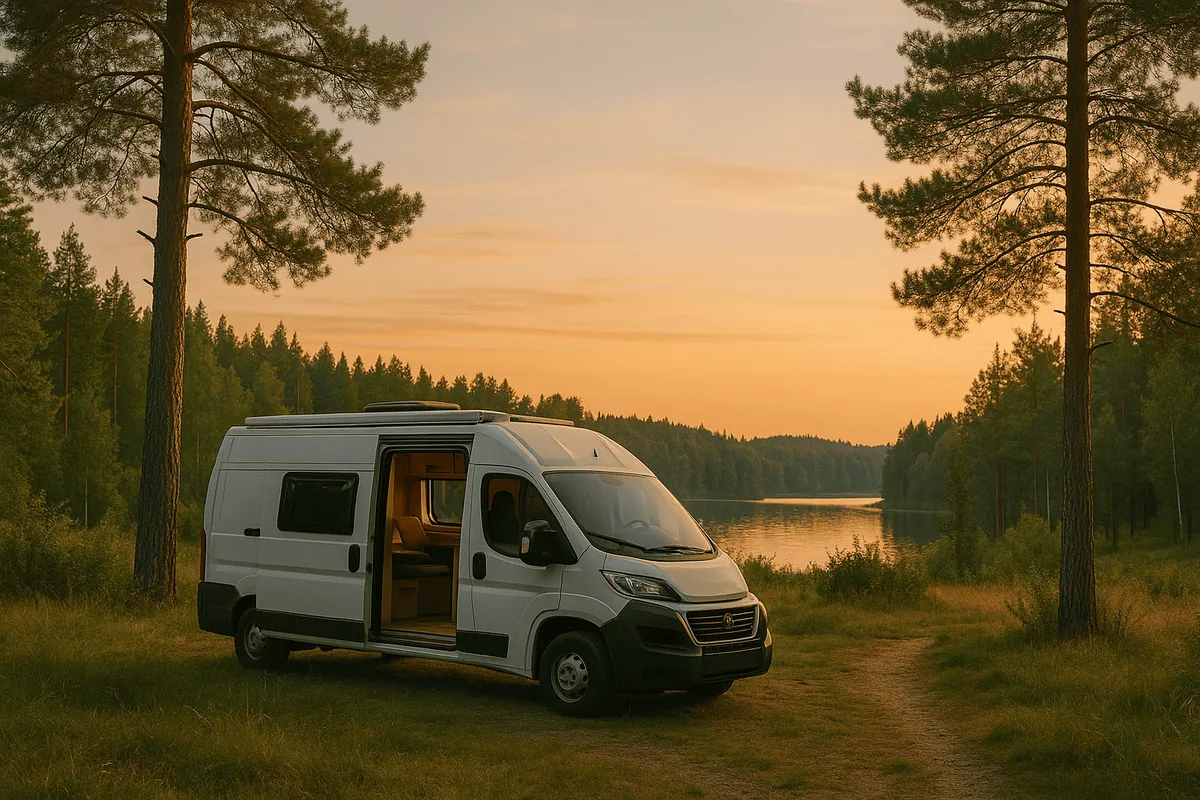
You've decided to take the plunge into life on wheels, but straight away you hit a wall of terms: camper van, motorhome, converted van, "van life"... Is it all the same thing? What actually suits you? Before spending a significant amount of money, it's worth understanding what genuinely sets each type apart, because the choice affects everything from where you can park to how much you'll pay for insurance.
Camper van (converted van)
This is a mid-size van (think Volkswagen Transporter, Ford Custom or similar) fitted out inside for sleeping and sometimes cooking. The key point is that from the outside it still looks like a normal van.
- Pros: fits in a normal parking space, keeps a low profile (very handy for sleeping in the city), is nimble to drive, and uses less fuel.
- Cons: tight space, usually no fixed bathroom and not much headroom to stand up.
- Who it's for: couples or travellers who prioritise moving freely and don't need a lot of comfort.
"Large" camper or approved camper van
Bigger, taller vans (think a converted Fiat Ducato) that already let you stand up, fit a bathroom and more storage, while keeping a panel-van body. In practical terms, it's the middle ground between the small van and the full motorhome.
Motorhome
Here we're talking about a vehicle purpose-built as living accommodation: the habitable cell is built onto a chassis (coachbuilt, low-profile or A-class/integrated). It offers maximum comfort: fixed beds, a full bathroom, a spacious kitchen and plenty of storage.
- Pros: the liveability of a small house, ideal for families or long stays.
- Cons: size and weight (watch your licence category and GVM), harder to park, higher fuel consumption and pricier insurance.
- Who it's for: families, long-term travellers, or anyone unwilling to give up comfort.
The detail a lot of people overlook: approval
A van with a mattress thrown in the back isn't the same as a vehicle officially approved as living accommodation. On the technical spec sheet, the vehicle's classification (e.g. "motor caravan") has consequences for insurance, the roadworthiness test, and what you're legally allowed to do inside. If you're converting a van yourself, make sure you're clear on which changes need official approval; getting it wrong can cause problems at an inspection. [Note: exact approval requirements vary by country — check your local vehicle regulations.]
A quick guide to deciding
To sum up the essentials: if you prioritise freedom of movement, the city, and a tighter budget, go for a camper van. If you want balance between liveability and manoeuvrability, go for a large approved conversion. If you're after home-level comfort for a family or long stays, go for a motorhome. None is better than the others; there's just one that's better for how you travel.
What they all have in common: electrical autonomy
Whichever format you choose, all of them depend on a good electrical installation for the fridge, lights, and charging devices when there's no plug socket. It's actually one of the areas where the difference between a well-built vehicle and an improvised one shows the most. If that interests you, start with how much battery you need and lithium or AGM.
In short
The difference between a camper van, a large van and a motorhome mainly comes down to size, comfort and approval status, and each one suits a different type of traveller. The one thing to do today: before browsing models, answer three questions: how many people will be travelling, for how many consecutive days, and where do you need to be able to park? Those answers rule out half the options on their own.