
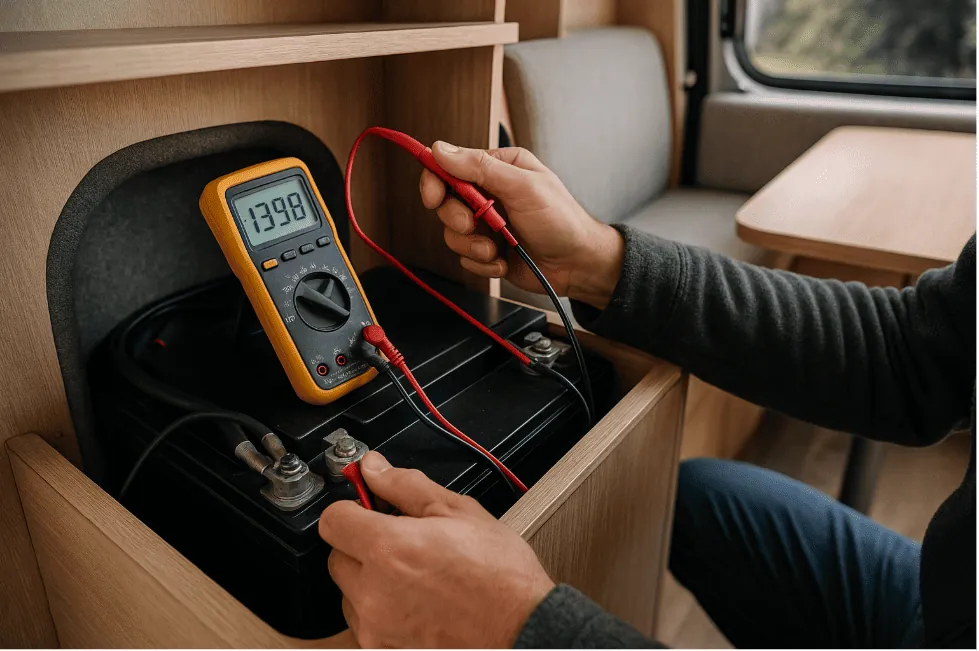
You've got solar panels for the days you're parked up, but what about the days you're driving? Your van's engine generates electricity while you're on the road, and using it to recharge the auxiliary battery is one of the best power sources you have, especially in winter when sun is scarce. The key to doing it properly (without damaging anything) is a device called a DC-DC charger, also known as a booster. Let's look at why you need one.
How it used to be done: the split-charge relay
For years, the auxiliary battery was charged from the alternator through a simple split-charge relay, which connected the starter battery to the auxiliary one once the engine started. It works, but it has two big problems with modern batteries: it doesn't charge at the right voltage (leaving the battery half-charged) and, especially with lithium, it can cause a serious problem.
The problem lithium has with a direct alternator connection
A lithium (LiFePO4) battery is very "hungry": it accepts all the current you give it. If you connect it directly to the alternator, it can demand so much current that it overheats and damages the alternator, because the alternator isn't built to deliver maximum output continuously. It's one of the classic mistakes people make when switching to lithium, as covered in installation mistakes.
The solution: the DC-DC charger (booster)
A DC-DC charger sits between the alternator and the auxiliary battery, and does three key things:
- Limits the current drawn from the alternator, protecting it from overload.
- Charges at the correct voltage and profile for your battery type (lithium, AGM, gel), filling it fully and safely.
- Many models also integrate solar input, managing both sources (engine and panel) intelligently.
In short: it turns every hour of driving into an efficient, safe recharge. It's practically essential in a modern lithium installation.
What charger rating to choose
DC-DC chargers are rated in amps (A). The most common in campers range from 20 to 50 A. Higher amperage means faster charging, but it also demands more from the alternator, so it's worth matching it to your vehicle and battery. 30 A is a very common rating for mid-sized installations.
The three charging sources, working together
The ideal setup combines three sources: mains (when you're plugged in), the alternator via a DC-DC charger (when you're driving), and the solar panel (when you're parked with sun). Together, they give you autonomy in almost any situation, all feeding the same tank: your battery. If you're unsure which battery to fit, lithium or AGM can help, and to size the whole system, see how much battery you need.
In short
The DC-DC charger is what lets you recharge your battery from the engine quickly, fully, and above all safely for the alternator — something especially important with lithium. The one thing to do today: if you have or are about to fit a lithium battery and charge it from the alternator, confirm you have a DC-DC charger and not a simple relay; it's the difference between charging properly and risking an expensive alternator failure.