
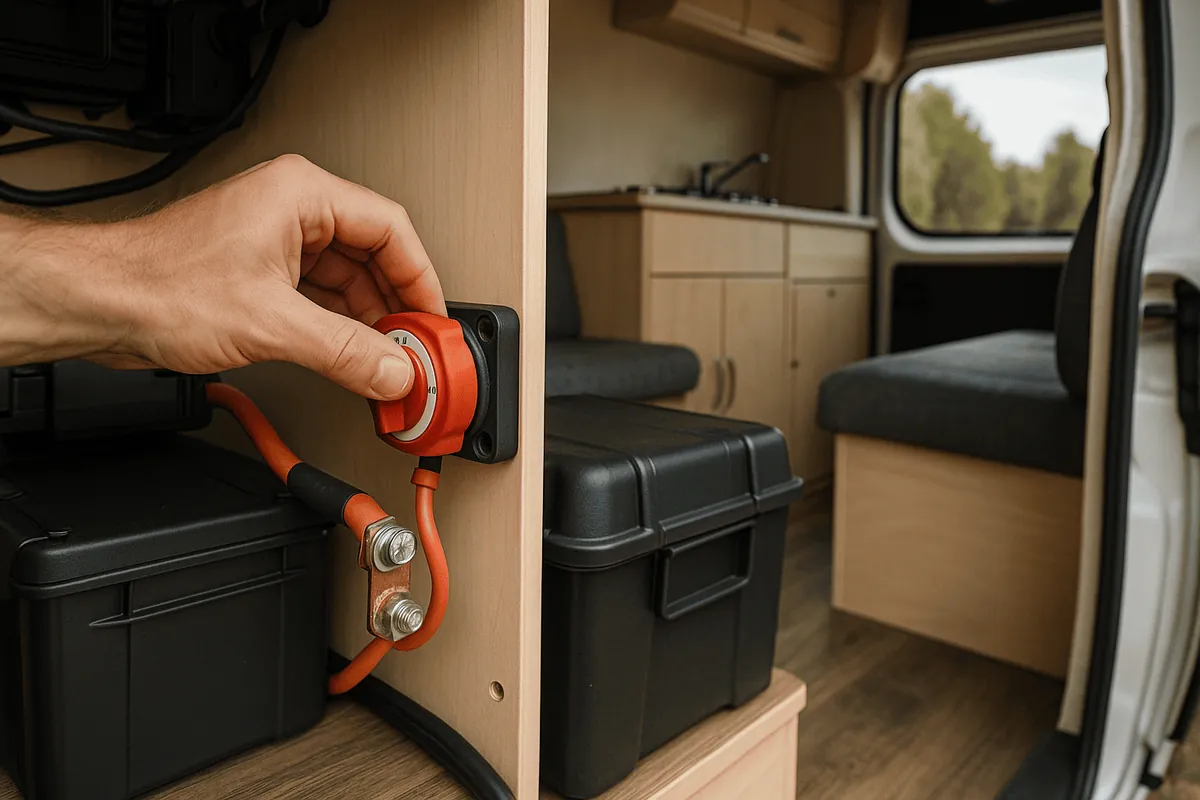
Your motorhome has two batteries living side by side that a lot of people confuse, but they do almost opposite jobs: the starter battery and the auxiliary (or leisure) battery. Understanding the difference is basic, because using one to do the other's job is a recipe for getting stranded or damaging it. Let's clear it up once and for all.
The starter battery: brief and brutal effort
This is the classic vehicle battery, the one that starts the engine. Its job is to deliver huge amounts of current for a couple of seconds (the time it takes to start), and then the alternator recharges it right away. It's built for that: very high power spikes, but not for being deeply discharged. If you drain it fully several times, it fails fast.
The auxiliary battery: gentle and sustained effort
This is the one that powers the "living area": fridge, lights, water pump, charging devices. Its job is exactly the opposite: deliver a moderate current for many hours and handle being deeply discharged again and again without failing. That's why they're called deep-cycle batteries. This is where deep-cycle AGM comes in, and above all, lithium (LiFePO4).
Why they're not interchangeable
If you used a starter battery as an auxiliary, it would fail quickly from being deeply discharged every night. And an auxiliary battery isn't designed to deliver that brutal starting spike. Each one does its own job. That's why the installation keeps them separate, and the auxiliary charges without draining the starter battery (so the engine can always start).
How they coexist and charge
Both charge from the alternator while you drive, but through a system that prioritises the starter battery and then charges the auxiliary (a split-charge relay or, better with lithium, a DC-DC charger). That way you never lose the ability to start the engine because you've used up the living area's power.
Which auxiliary battery to choose
For the auxiliary's deep-cycle job, lithium (LiFePO4) is the most recommended option today: it handles far more cycles, delivers more usable energy, and weighs less. We compare it in lithium or AGM, and to size it correctly, see how much battery you need.
In short
The starter battery delivers a brief, huge spike to start the engine; the auxiliary delivers moderate energy over hours and gets deeply discharged for the living area. They're not interchangeable and they coexist separately. The one thing to do today: confirm your living-area battery is a genuine deep-cycle unit (ideally lithium), not a repurposed starter battery; using the wrong battery is a mistake that costs you dearly.