
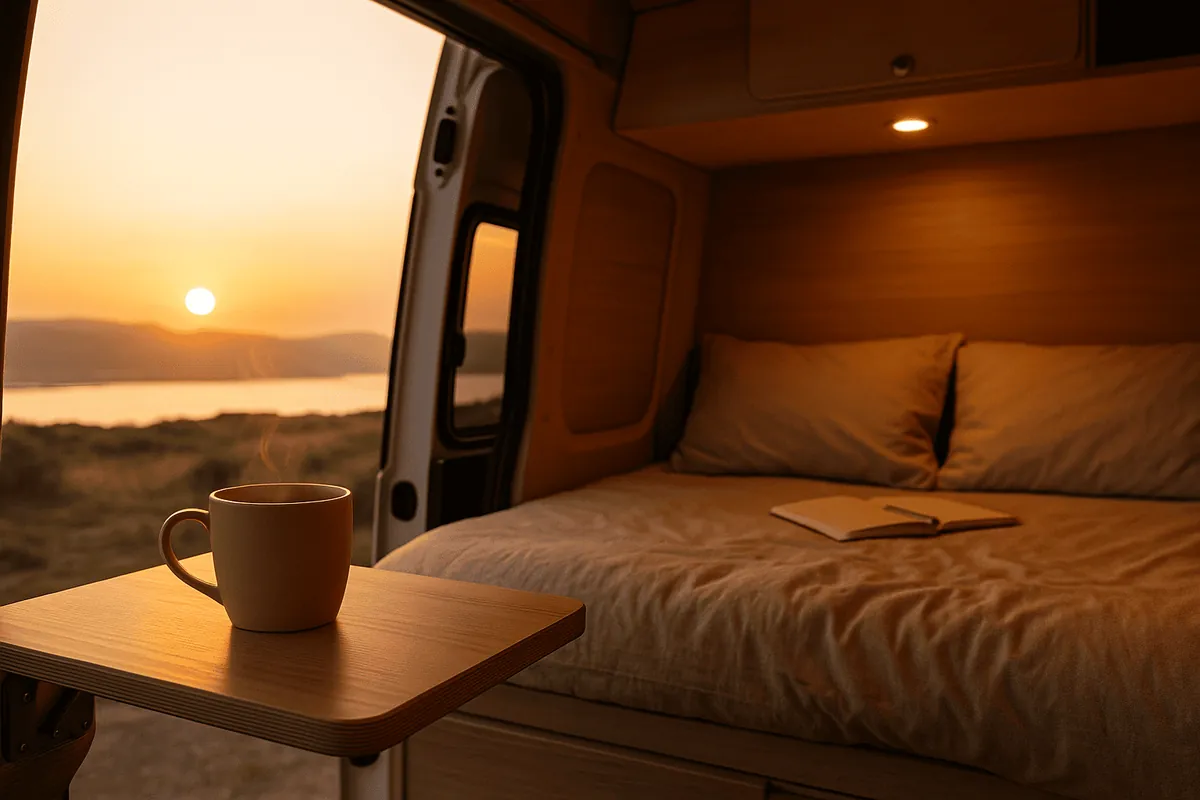
Few experiences are as awe-inspiring as lying back and looking up at a truly starry sky, with the Milky Way stretching from one side to the other. The problem is that, from cities, light pollution steals that show from us. And this is where the motorhome works its magic: it takes you straight to the dark places where the sky fills up. Here's your guide to enjoying astronomy on wheels.
The enemy: light pollution
Light pollution is the excess artificial light that brightens the night sky and washes out the stars. From a city you might spot a handful; from a dark spot, thousands, plus the Milky Way. The key to enjoying the sky is getting away from the lights — and that's exactly what a motorhome lets you do.
Where to look up
Europe has some genuinely dark skies: sparsely populated mountain regions, Starlight-certified reserves and observatories. As a rule, the further from urban centres and the higher the altitude, the better. Look for rural, low-population destinations (see the Pyrenees as one example).
When and how to observe
- Moonless nights (new moon) with clear skies: a full moon "pollutes" the sky too.
- Let your eyes adjust to the dark (20–30 minutes) and use red light so you don't ruin your night vision.
- Use astronomy apps to identify planets, constellations and meteor showers (the Perseids in August, the Geminids in December).
- Wrap up warm: it cools down at night, even in summer.
Kit (from basic to advanced)
- Your eyes and a blanket: to get started, you don't need anything else.
- Binoculars: it's surprising what you can see (the Moon, star clusters, Jupiter's moons).
- A telescope: if you get hooked; think about how much space it takes up in the van.
A motorhome with quiet power (battery, no noisy generator) respects the calm of the night and of the people around you (use the calculator).
In summary
The motorhome takes you to the dark skies where astronomy comes alive, away from light pollution. The step to take today: pick a moonless, clear night in a rural, low-population destination, let your eyes adjust and look up; a pair of binoculars is all you need to start being amazed. Combine it with clear-sky destinations like the Pyrenees.