
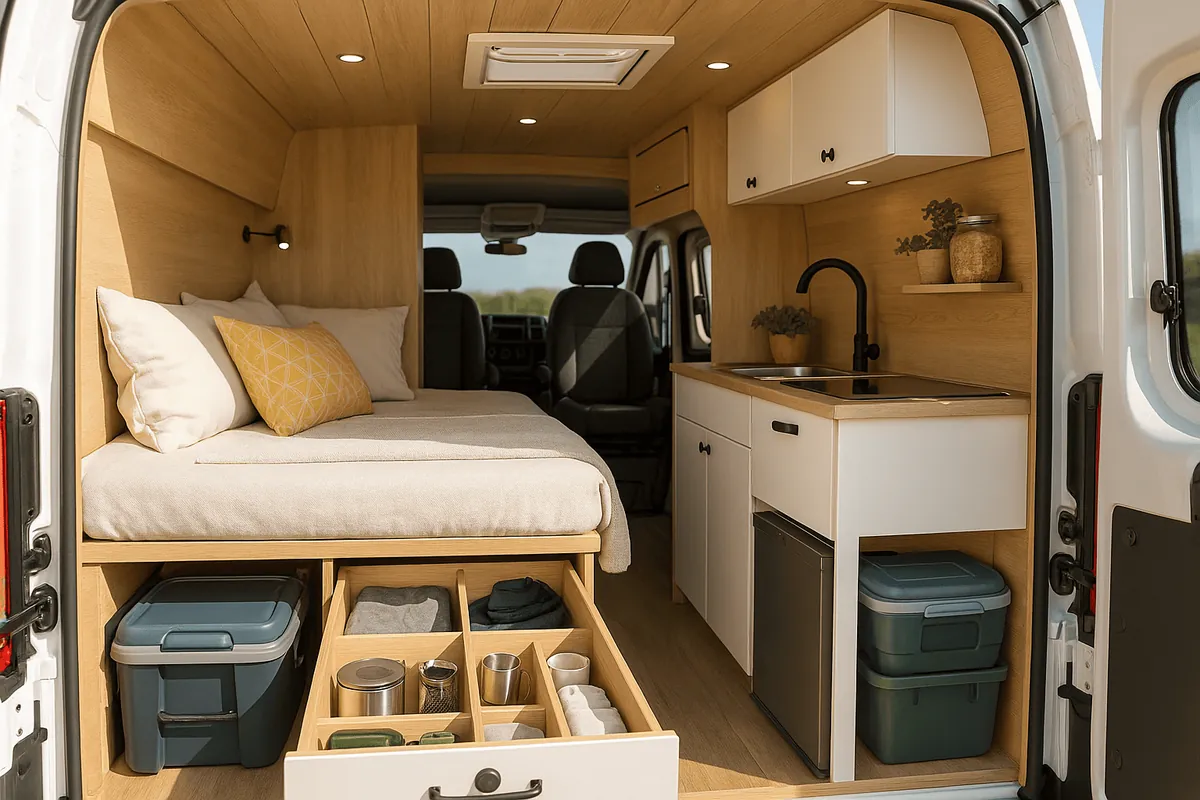
Having a medical need that requires electrical equipment (a CPAP for sleep apnoea, an oxygen concentrator, a fridge for medication, and so on) shouldn't stop you enjoying motorhome travel. But it does mean planning your power carefully, because that equipment can't be allowed to fail. Here's how to make sure your medical equipment works reliably on the road. (Always check with your doctor and the equipment manufacturer.)
The challenge: reliable, sufficient power
Medical equipment is often a load that needs to run all night or continuously, and one you genuinely depend on. What matters is making sure your electrical setup can power it without running out of battery, even far from mains hook-ups. Here, a well-sized battery isn't a luxury: it's peace of mind.
Know your equipment's power draw
The first step is knowing how much power your equipment uses and whether it runs on 12V or needs 230V (via an inverter):
- Many CPAP machines can run on 12V or have accessories to run from the vehicle's battery, which is more efficient than going through an inverter. Check the manual.
- Oxygen concentrators use considerably more power; assess their draw carefully.
- Work out the watt-hours used per night or per day (see how much each appliance uses).
Size the setup with a margin
Once you know the power draw, size the battery (lithium/LiFePO4 is best, for its greater usable energy and lifespan) and the charging system (solar, alternator with a B2B charger) with a generous margin, because this is equipment you depend on. Use the autonomy calculator and, if in doubt, ask a technical team to help you get it right (at Upcyon we reply within 24 hours). The peace of mind of knowing you won't run out of power is worth it.
Have a backup plan
- A backup battery or a portable power station as a fallback (see portable power station).
- Prioritise campsites with mains hook-up on days you need total security.
- Bring the cables and adapters for your equipment (12V, 230V, its own batteries).
- Let people know your situation and carry the equipment's medical documentation.
In summary
Travelling with medical equipment in a camper is entirely possible if you secure reliable power: know its power draw, size the battery with a margin, and have a backup plan. The step to take today: check your equipment's power draw and voltage in the manual (many CPAP machines run on 12V), work out the watt-hours you need per night, and size the setup with plenty of headroom; if in doubt, ask a technical team for help. Combine it with the autonomy calculator.