
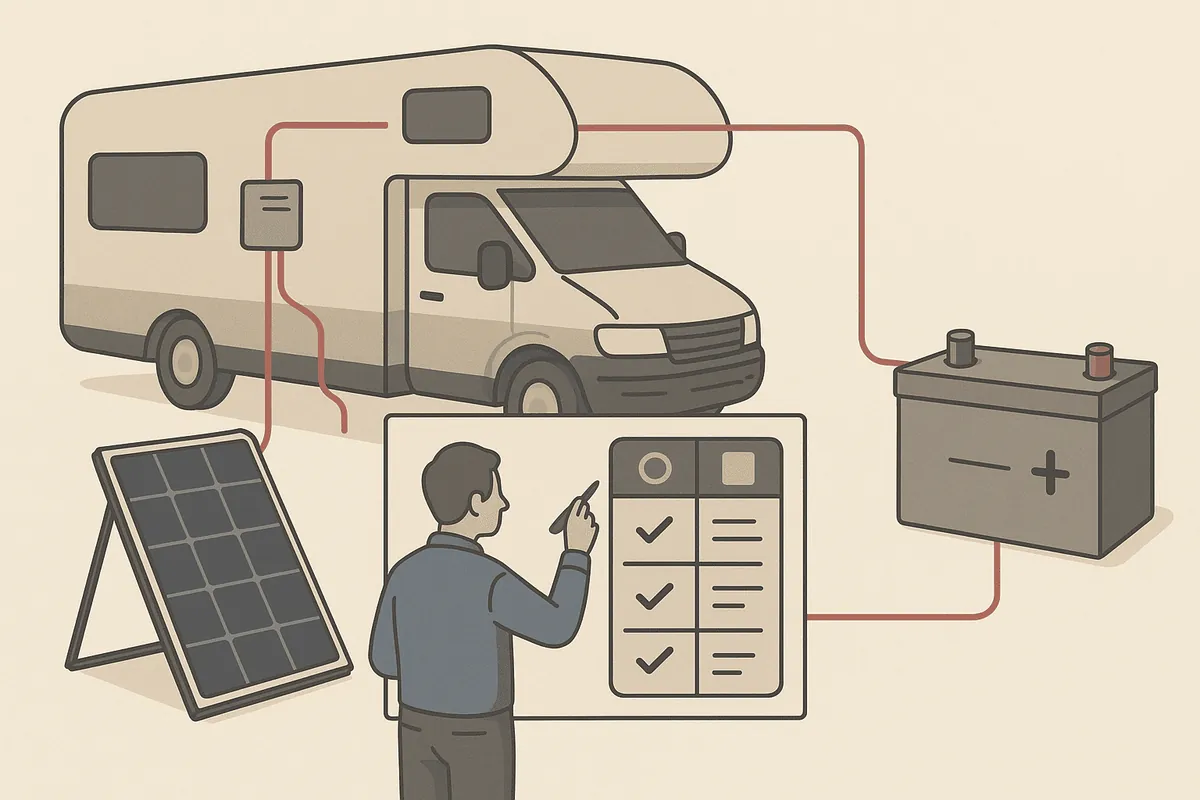
An uncomfortable truth of camper life: the motorhome spends most of the year parked, and prolonged inactivity takes as much of a toll on the mechanics as actual use does, if not more. Engine, battery, tyres, brakes... everything suffers when a vehicle doesn't move for months. With a little simple care, though, you can avoid breakdowns and nasty surprises. Here's the guide.
Why inactivity causes damage
A vehicle is built to move. Left standing for a long time, problems appear: the starter battery discharges, tyres develop flat spots and lose pressure, brakes can seize up or rust, fluids degrade, and damp and pests move in. None of this is serious if you prevent it; all of it is if you ignore it.
What to do during long breaks
- Take it for a run now and then: ideally, give it a proper drive every few weeks (let the engine reach temperature, the brakes work, the DPF regenerate; see the DPF). A real run is better than simply starting it while stationary.
- Starter battery: the engine battery discharges on its own; a trickle charger or driving it prevents it from dying (the leisure battery, ideally lithium, copes better with storage; see disconnecting the battery).
- Tyres: correct pressure (slightly higher) and, if you can, move the vehicle so they don't develop flat spots from the weight always resting on the same point (see tyres).
- Fuel and AdBlue: keep the diesel tank fairly full (reduces condensation) and AdBlue topped up (see AdBlue).
Don't forget the living area
Don't overlook the habitation side during long breaks: empty the water so it doesn't stagnate or freeze, ventilate against damp and mould, and clean up so as not to attract pests (see winterising and pests in a camper).
Before setting off again
- Check fluid levels, tyre pressures and lights.
- Test the brakes carefully over the first few metres.
- A gentle run before a long trip to catch any problem close to home.
In summary
Prolonged inactivity damages a camper's mechanics (battery, tyres, brakes, fluids), but it's easily prevented with simple care. The step to take today: if your camper is going to sit unused, give it a proper run every few weeks, look after the starter battery and tyre pressure, and prepare the living area; that way you'll avoid breakdowns and surprises when you set off travelling again. Pair it with winterising.